



Education Secretary Sonny Angara has expressed full support for Senate Bill No. 2426, or the proposed Comprehensive School Safety Act, authored by Senate Committee on Basic Education Chairperson Senator Bam Aquino, as the measure seeks to establish a long-term national framework for protecting learners and ensuring safe schools.
Angara thanked Aquino and the bill’s co-authors for advancing legislation that strengthens school safety and learner well-being. The proposed law seeks to institutionalize the Department of Education’s (DepEd) existing learner protection programs, ensuring that essential safety measures receive sustained funding and implementation.
The legislative initiative comes amid heightened nationwide concerns over school security following recent campus shooting incidents in Tacloban City and Zamboanga City. Angara visited the affected communities to meet with local authorities, school personnel, parents, injured learners, and bereaved families.
The Education Secretary said the proposed legislation would strengthen ongoing DepEd reforms, including the nationwide School Safety Campaign and the Guidelines on Ensuring a Safe and Motivating Learning Environment (ESMLE).
“By converting our campus security, anti-bullying, and mental health support protocols into a permanent national framework, the bill guarantees these safeguards remain funded and sustained for future generations,” Angara said.
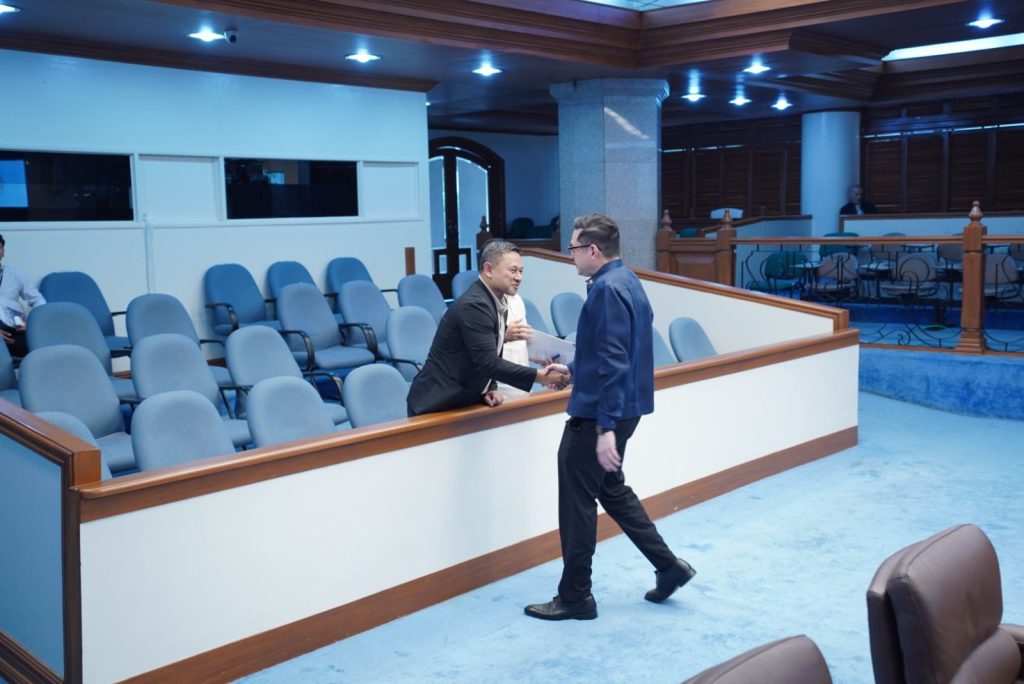
Angara attended the Senate plenary session on Wednesday during the sponsorship of the measure. In his speech, Aquino urged Congress to prioritize the bill and include it in the Legislative-Executive Development Advisory Council (LEDAC) priority list. Several senators also expressed support by co-sponsoring the proposed legislation.
Angara emphasized that schools must remain safe spaces where children can learn and thrive, noting that learner protection requires a whole-of-community approach.
The Comprehensive School Safety Act proposes a three-pillar framework covering prevention, response, and recovery.
Under prevention, the bill would require risk assessments and safety training for parents, teachers, and student leaders. The response pillar would establish emergency protocols, communication networks, active attack safety drills, and coordination mechanisms with authorities. The recovery component would provide psychosocial support, trauma-informed care, and structured return-to-school plans for affected learners, personnel, and families.
Angara stressed that protecting learners involves not only strengthening physical security but also addressing behavioral, psychosocial, and mental health concerns.
As part of its physical security measures, DepEd’s School Safety Campaign includes the provision of handheld metal detectors in public schools, stricter visitor management, regular bag inspections, perimeter fencing, and CCTV systems. The campaign also calls for increased police patrols and the strategic deployment of security personnel based on the specific needs of schools.
Meanwhile, DepEd continues to strengthen learner protection and mental health services through DepEd Order No. 006, s. 2026, or the ESMLE guidelines. These efforts include reinforcing Child Protection Committees, expanding the National Learners Telesafe Contact Center Helpline (LTCCH) in partnership with the National Center for Mental Health (NCMH), and strengthening reporting mechanisms that provide psychological assistance to learners experiencing bullying, abuse, and trauma.
The department is also fast-tracking the hiring of 10,000 School Counselor Associates to help identify early signs of distress and encourage learners to seek appropriate support.
