


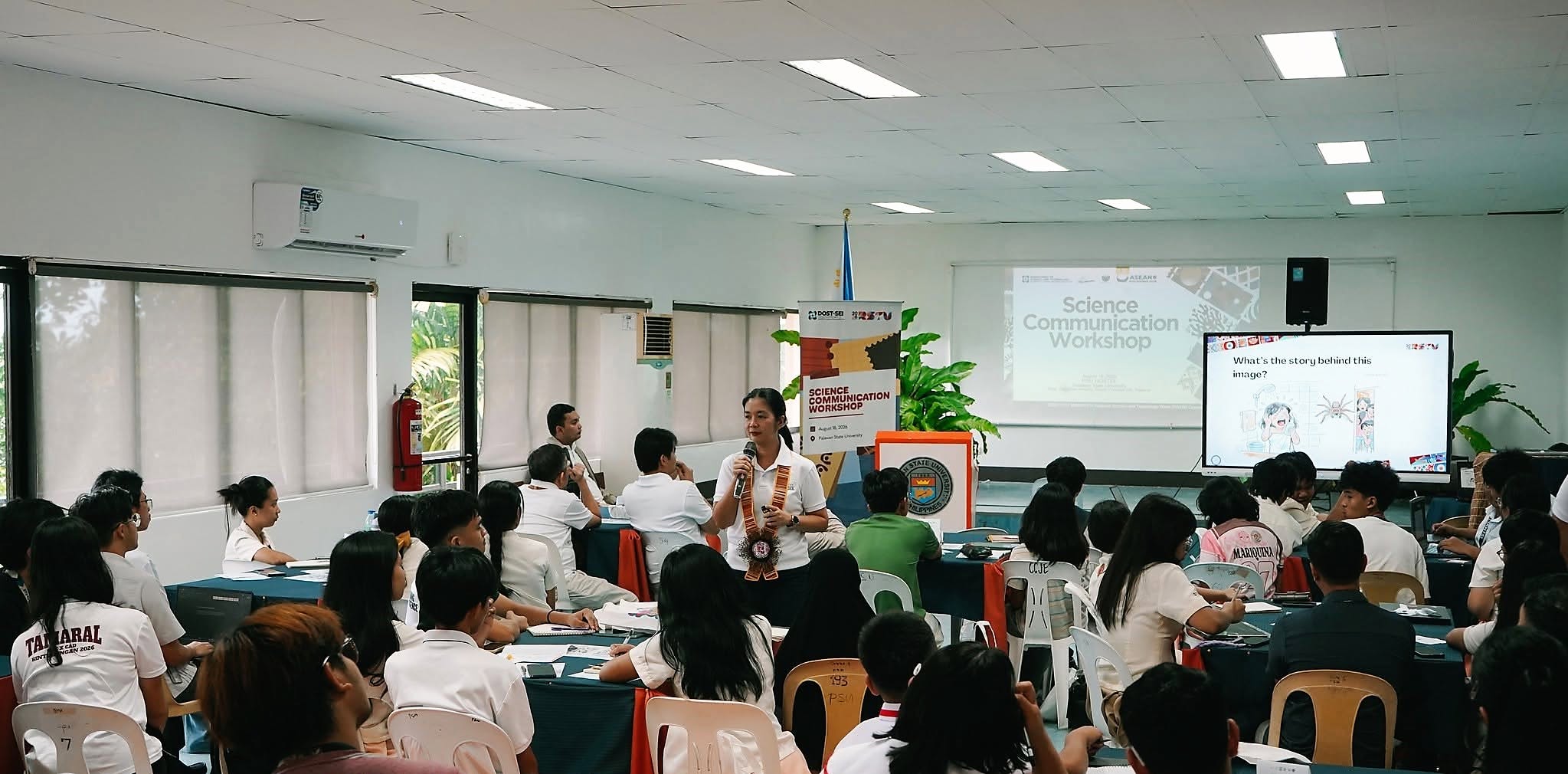
Renowned entomologist, spider expert, and University of the Philippines Los Baños (UPLB) Professor 12 Dr. Aimee Lynn Barrion-Dupo led a Science Communication Workshop at Palawan State University (PalSU), encouraging students and educators to make scientific research more accessible through storytelling and visual media.
The workshop was held as part of the Department of Science and Technology-MIMAROPA Regional Science, Technology, and Innovation Week, with the goal of equipping participants with practical approaches to translate complex scientific concepts into engaging and easy-to-understand narratives. PalSU President Dr. Venzon L. Limpiada opened the event with welcome remarks.
Barrion-Dupo focused her lecture on human-centered science storytelling, highlighting the difference between simply presenting academic data and effectively communicating science to a wider audience. She demonstrated how adding human experiences and relatable narratives can make complex scientific topics easier to understand and more meaningful to the public.
A strong advocate of science communication, Barrion-Dupo uses platforms such as Facebook and Instagram to raise awareness about arthropod diversity, conservation, and the important role of these often-overlooked creatures in ecosystems. She is also a member of the Board of Judges for the 10th Indie-Siyensya Filmmaking Competition.
Beyond her work as a UPLB Professor 12 and UP Scientist III at the Institute of Biological Sciences, Barrion-Dupo serves as curator for spiders and moths at the UPLB Museum of Natural History. She previously headed the National Research Council of the Philippines and served as UP Faculty Regent from 2021 to 2022, where she championed faculty welfare initiatives during the COVID-19 pandemic. She earned her BS, MS, and PhD in Entomology from UPLB and was named an Outstanding Young Scientist by the National Academy of Science and Technology in 2015.
Joining Barrion-Dupo as a resource speaker was advocacy filmmaker and fellow Indie-Siyensya judge Seymour Sanchez, who shared techniques for presenting scientific topics through documentary filmmaking approaches and narrative structures. Juan Antonio Tuazon of the DOST-Science Education Institute later introduced participants to the Indie-Siyensya Film Festival, the country’s premier science filmmaking competition.
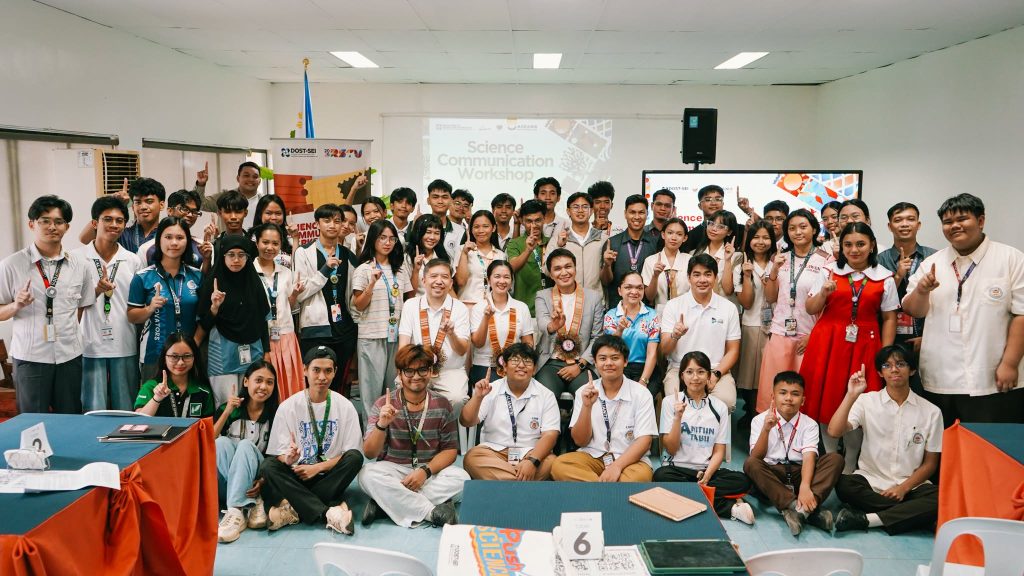
Through the workshop, Barrion-Dupo and the other speakers highlighted how science communication can go beyond technical information by using compelling stories, visual media, and relatable experiences. The session ultimately encouraged students and educators to explore storytelling and filmmaking as powerful tools for becoming the next generation of science communicators.
