


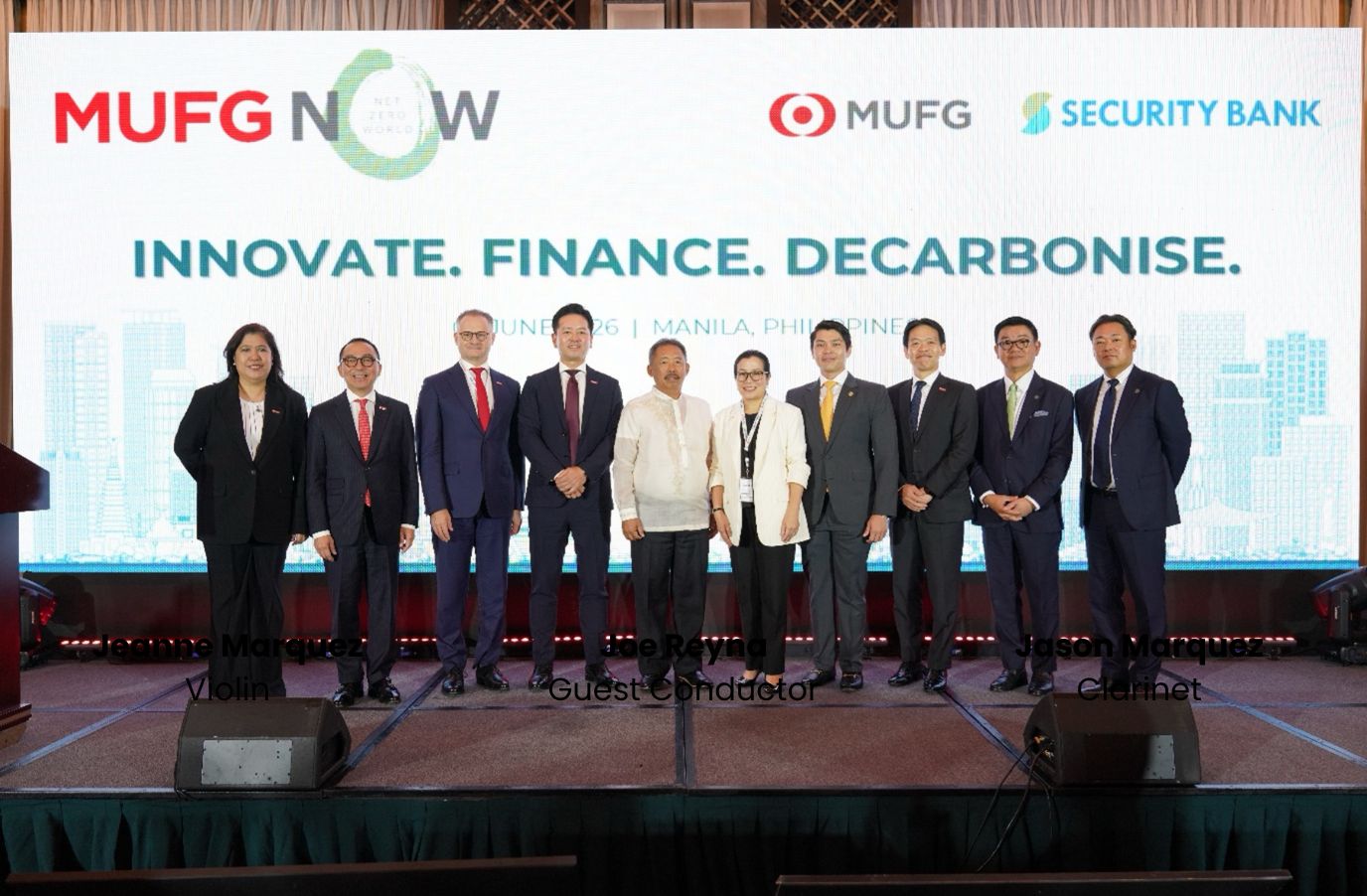
MUFG Bank, Ltd. (MUFG) and Security Bank Corporation brought together leaders from government, finance, and industry at MUFG N0W (Net Zero World) Manila 2026, MUFG’s flagship regional thought leadership platform focused on the role of finance, innovation, and partnerships in Asia’s sustainable growth.
Now in its third year in the Philippines, MUFG N0W has become a key forum for discussions on the forces shaping the region’s future. This year’s event explored how governments, businesses, and financial institutions can work together to strengthen energy security, accelerate investment, and support long-term growth in an increasingly complex operating environment.
The forum comes at a pivotal time for the region. As the Philippines chairs the ASEAN, energy security, regional connectivity, and sustainable finance have emerged as key priorities. Against this backdrop, discussions focused on the investments, technologies, and partnerships needed to build a more resilient, competitive, and future-ready economy.
The event also marked the 10th anniversary of the strategic partnership between MUFG and Security Bank. Over the past decade, the alliance has strengthened Security Bank’s ability to connect clients to global expertise, capital, and cross-border opportunities while supporting investments in sectors critical to the country’s long-term development.
Keynote addresses were delivered by Mario Marasigan, Undersecretary of the Department of Energy and Michael Peter Alejandro, Undersecretary of the Department of Finance, both highlighted the country’s priorities for energy security, resilience and sustainable economic growth.
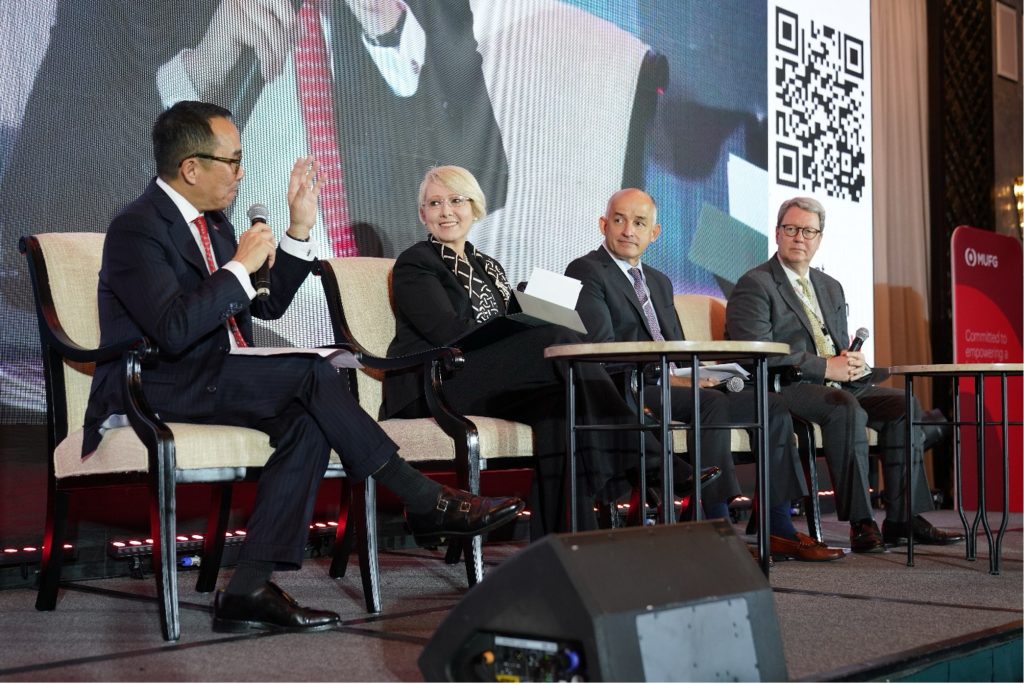
industry experts and business leaders in a thought-provoking panel discussion on pathways to a
sustainable future, highlighting both the opportunities and challenges in the transition.
Usec. Marasigan said: “We commend this enduring collaboration as a strong example of how private sector alignment can drive growth that is both sustainable and inclusive. This event sends a clear signal from the financial community that energy transition is not only an environmental merit but also a strategic investment opportunity.”
He underscored the Philippines’ commitment to a pragmatic energy transition that balances clean energy goals with reliability, affordability, and growth. Under the Philippine Energy Plan, the country is targeting 35% renewable energy by 2030 and more than 50% by 2040.
To achieve this, the government is driving reforms that welcome foreign investment, modernize the grid, and expand energy storage and microgrids. Efforts also include scaling up renewable energy alongside natural gas, promoting energy efficiency and electric vehicles, and mobilizing private capital through innovative financing.
He further added: “The Department of Energy is committed to making the Philippines a preferred destination for clean energy investment in Southeast Asia. We will continue our efforts to reform, simplify, and improve the investment environment, while engaging in regional exchanges of best practices to accelerate decarbonization and drive a successful energy transition.”
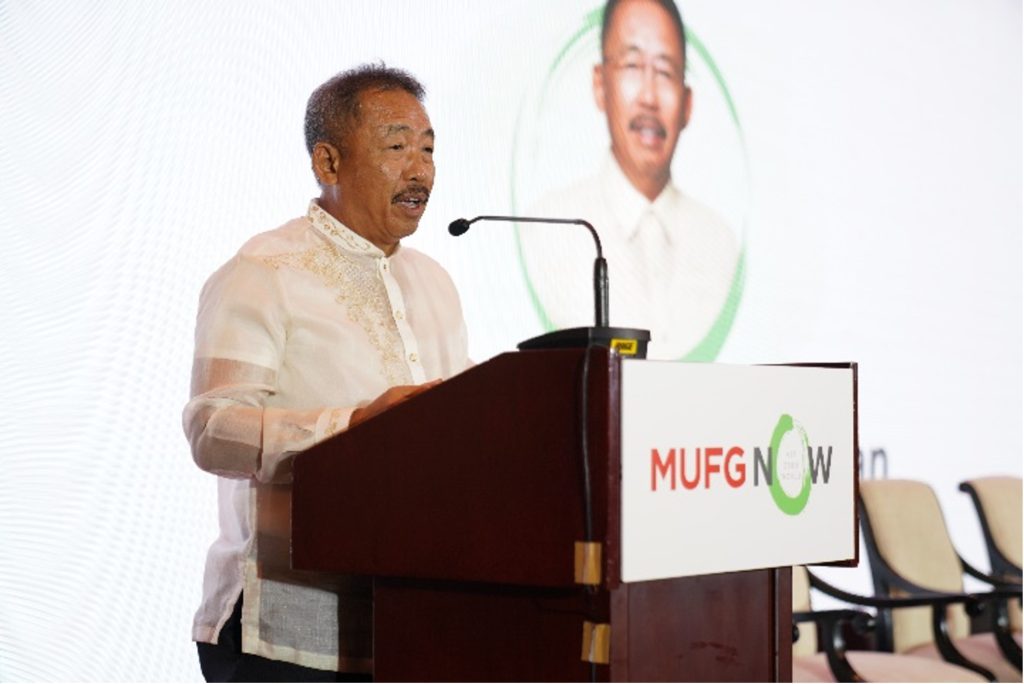
In his remarks, Usec. Alejandro underscored the Philippines’ proactive and forward-looking approach in navigating global economic and climate challenges, emphasizing that “climate risks are economic risks.”
He highlighted the country’s strong economic fundamentals—robust GDP growth, a young and dynamic workforce, and a stable investment climate—alongside bold reforms such as the CREATE MORE Act, the PPP Code, and the Investors’ Lease Act. Together, these measures signal the Philippines’ commitment to creating an enabling environment for investment and accelerating infrastructure development.
Yukinobu Saeki, Chief Executive for MUFG APAC, in his welcome remarks said: “Asia Pacific stands at the forefront of the global transition toward net zero, with the Philippines playing an increasingly pivotal role. As sustainability becomes inextricably linked to energy security and long-term competitiveness, cross-sectoral collaboration is essential. Through MUFG N0W, and in partnership with Security Bank as we mark our 10th anniversary, we are moving beyond dialogue to action—mobilizing the capital and expertise needed to support the country’s transition to a sustainable future.”
Colin Chen, Head of Sustainable Finance for MUFG APAC, added: “Sustainable finance in Asia is entering a more nuanced phase, with greater focus on industrial transition and supply chain resilience. For the Philippines, one of our fastest-growing markets for sustainable finance in the region, we see a renewed focus on achieving greater self-sufficiency in renewable energy capacity. while building a system that is reliable, affordable, and scalable. With our deep network within APAC and strong local partnership with Security Bank, we will continue to help connect capital and expertise to meet real world project needs.”
The discussions were grounded in real-world financing experience. Over the past decade, MUFG and Security Bank have supported a range of landmark transactions that demonstrate how capital can advance economic growth, energy security, and sustainability objectives.
These include MUFG’s participation in financing Vena Energy’s 300‑megawatt peak Opus Solar Energy Project in Ilocos Norte, the company’s first renewable energy project in the Philippines to be fully financed by international lenders. Security Bank has likewise strengthened its partnership with Vena Group through a green loan supporting the 80.6-megawatt Astra Solar Power Project. Together with adjacent developments financed by Security Bank, these projects contribute to the growth of renewable energy capacity in the region.
The partnership has also supported pioneering sustainable finance transactions, including Ayala Corporation’s first sustainability-linked loan, Ayala Land’s inaugural sustainability-linked bond, and sustainable trade finance facilities supporting renewable energy commitments by San Miguel Global Power and SN Aboitiz Power Group.
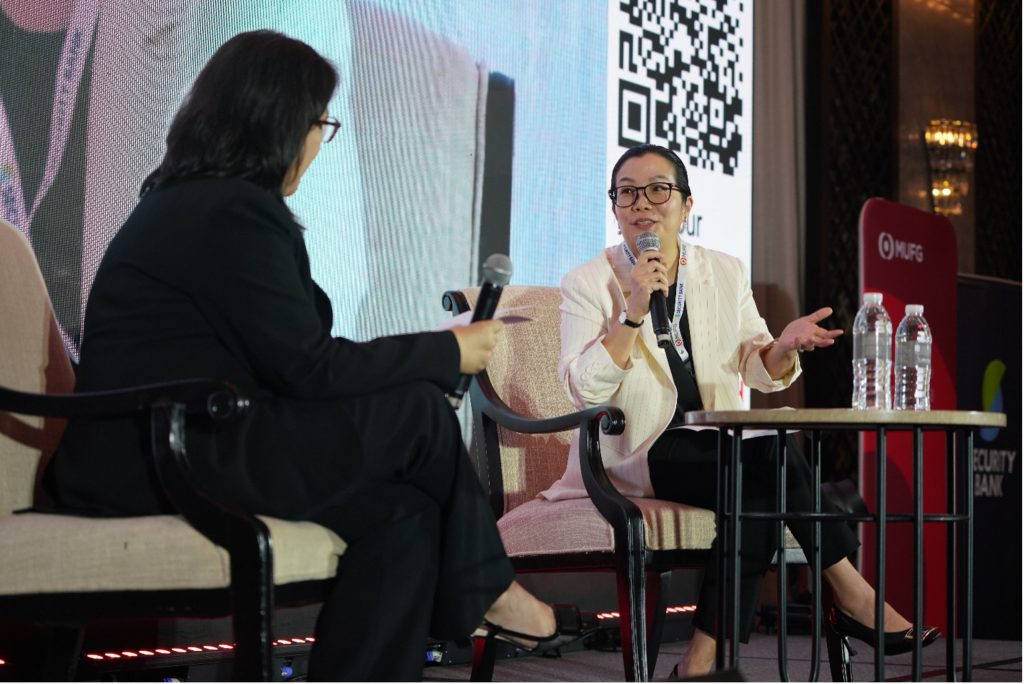
In a leadership dialogue, Bangko Sentral ng Pilipinas Assistant Governor Pia Roman Tayag discussed the role of the financial sector in supporting the country’s transition, resilience, and adaptation agenda.
She highlighted the Bangko Sentral ng Pilipinas’ role in laying the groundwork for sustainable finance by encouraging banks to treat climate and environmental issues as material financial risks affecting credit quality, asset values, and long-term stability, while emphasizing that the challenge is not looking at the risk, but the opportunities in making it financeable at scale.
Assistant Governor Pia Tayag noted that the BSP’s Sustainable Finance Framework, supervisory expectations, incentives, and taxonomy guidelines have helped build momentum across the sector, while emphasizing that smaller and rural banks remain critical in supporting climate-vulnerable communities, particularly in agriculture, households, and SMEs.
Victor Lee Meng Teck, President & CEO of Security Bank Corporation, said: “The next phase of the Philippines’ growth will require significant investment and new ways of thinking across industries. Security Bank is committed to helping clients navigate change and seize opportunity, drawing on the strength of our decade-long partnership with MUFG. MUFG N0W reflects our shared belief that the right ideas, capital, and partnerships will help shape the country’s future.”
As Security Bank celebrates its 75th anniversary and MUFG and Security Bank mark a decade of partnership, both institutions reaffirmed their commitment to supporting clients, industries, and investments that contribute to the Philippines’ long-term development.
