


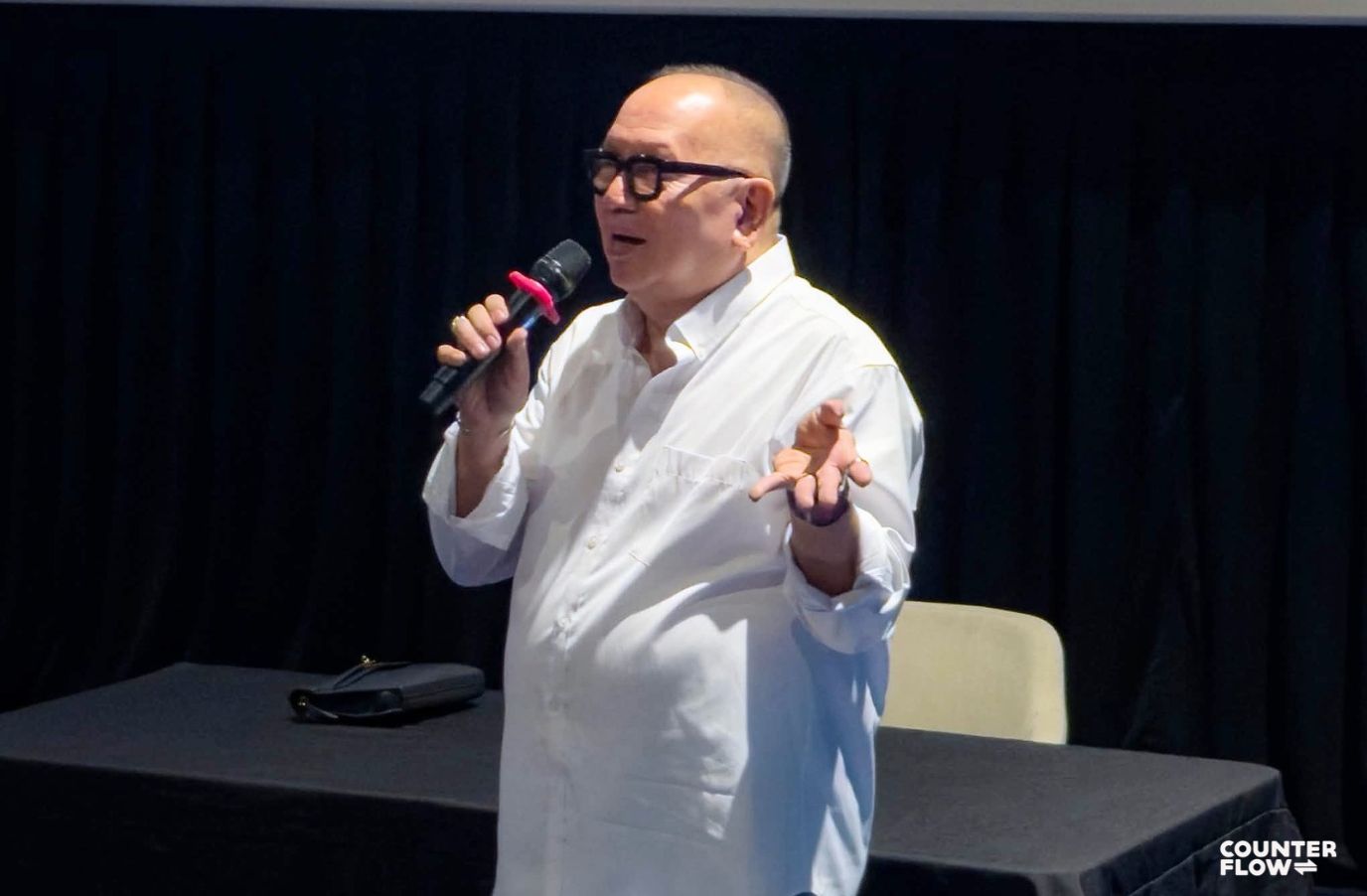
Film Development Council of the Philippines (FDCP) Chair and CEO Jose “Direk Joey” Javier Reyes revisited the devastating effects of World War II on Filipino society through a special lecture on Oro, Plata, Mata, held at Power Plant Mall in Rockwell, Makati City, on October 24.
Titled “Ravages of War: Filipinos in Peacetime, Conflict, and Its Aftermath in Oro, Plata, Mata,” the lecture offered audiences an in-depth look at the historical context, creative process, and human experiences that shaped one of Philippine cinema’s most celebrated films.
The event was co-presented by the Lopez Museum and Library, the National Commission for Culture and the Arts (NCCA), and the FDCP, with support from Power Plant Mall and ABS-CBN Sagip Pelikula, also known as the ABS-CBN Film Restoration Project.
Following the lecture, attendees watched a special screening of the digitally restored film, with original cast members Joel Torre and Ronnie Lazaro joining the event.
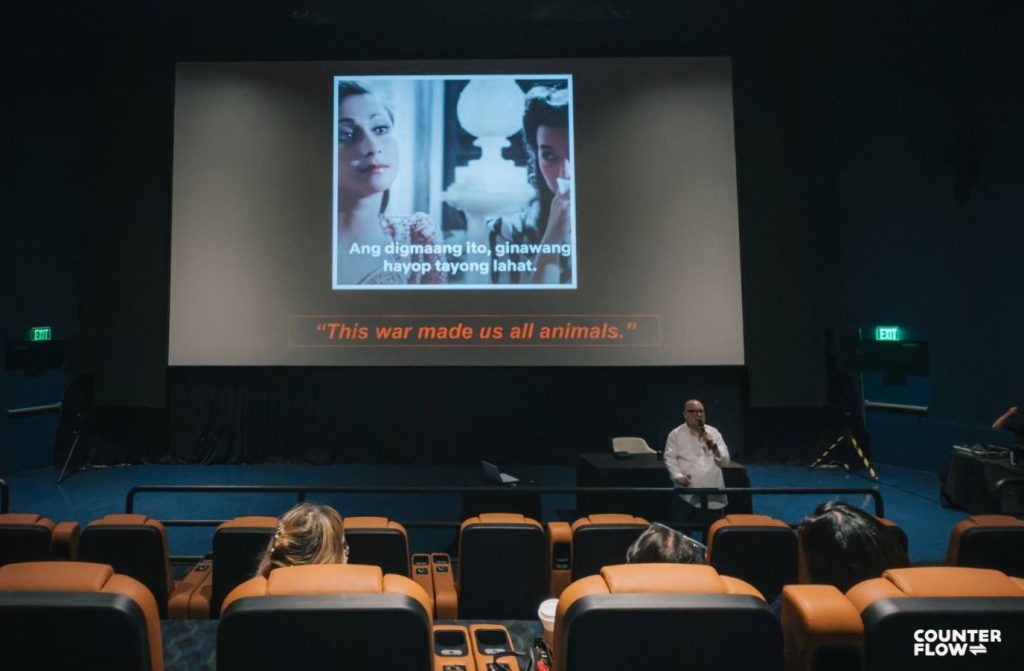
Before leading the FDCP, Reyes had established himself as one of Philippine cinema’s versatile creative voices as a director, playwright, and educator. Early in his career, he wrote the screenplay for Oro, Plata, Mata, helping shape a film that would become a landmark in the country’s cinematic history.
Drawing from extensive historical research and personal family accounts of World War II, Reyes discussed how historical experiences and collective memories informed the film’s narrative. He also shared insights into the writing process and how the realities of wartime life were translated into cinematic storytelling.
Released in 1982 and directed by the late Peque Gallaga, Oro, Plata, Mata is set in Negros during the Japanese occupation. The film follows two aristocratic haciendero families forced to flee as the war reaches their communities, tracing their gradual loss of wealth, security, and social standing.
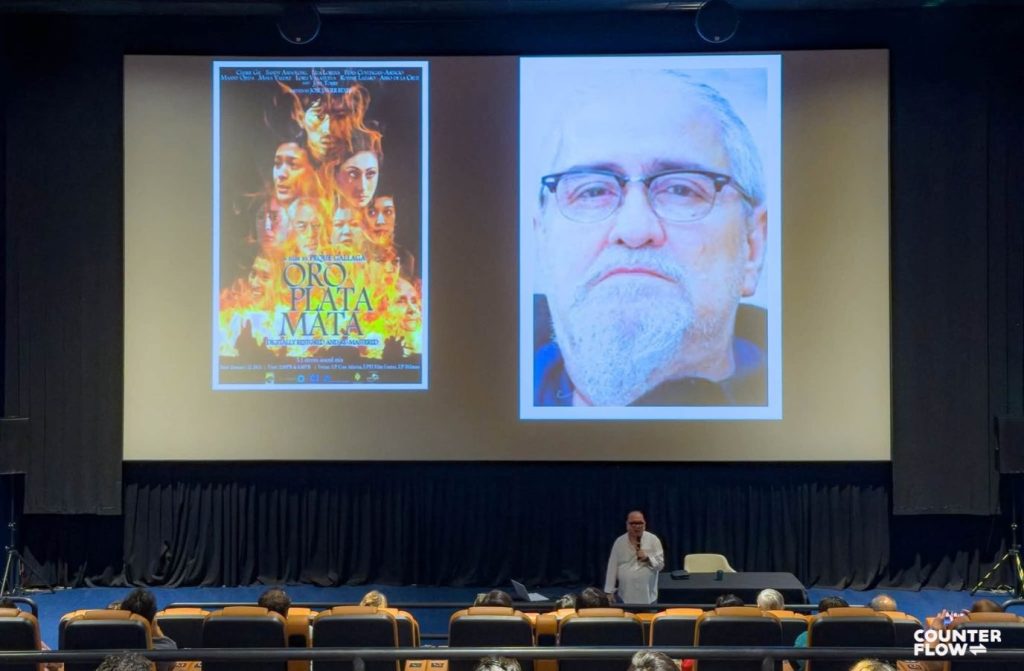
Its title comes from a traditional architectural superstition involving the counting of stair steps as “Gold, Silver, Death,” symbolizing the families’ eventual downfall.
Beyond depicting the physical destruction brought by war, the film examines how conflict changes human behavior and challenges established social values. As the characters struggle to survive, the distinctions between social classes and the conventions of civilized life begin to break down, revealing the instinct for self-preservation beneath their privileged upbringing.
Reyes also highlighted the film’s final sequences, emphasizing Gallaga’s message about the importance of confronting painful chapters in national history. He explained that societies cannot simply move beyond the trauma of previous generations without acknowledging the experiences, sacrifices, and compromises that continue to shape their identity.
“We should put greater value on looking at our past, because the past is the foundation of who we have become here and now,” Reyes stressed.
For students, film enthusiasts, and cultural advocates in attendance, the lecture and screening underscored the continuing relevance of Oro, Plata, Mata as a reflection of the Filipino experience during wartime. More than a historical account, the film remains a reminder that understanding the country’s past is essential to understanding its present.
