


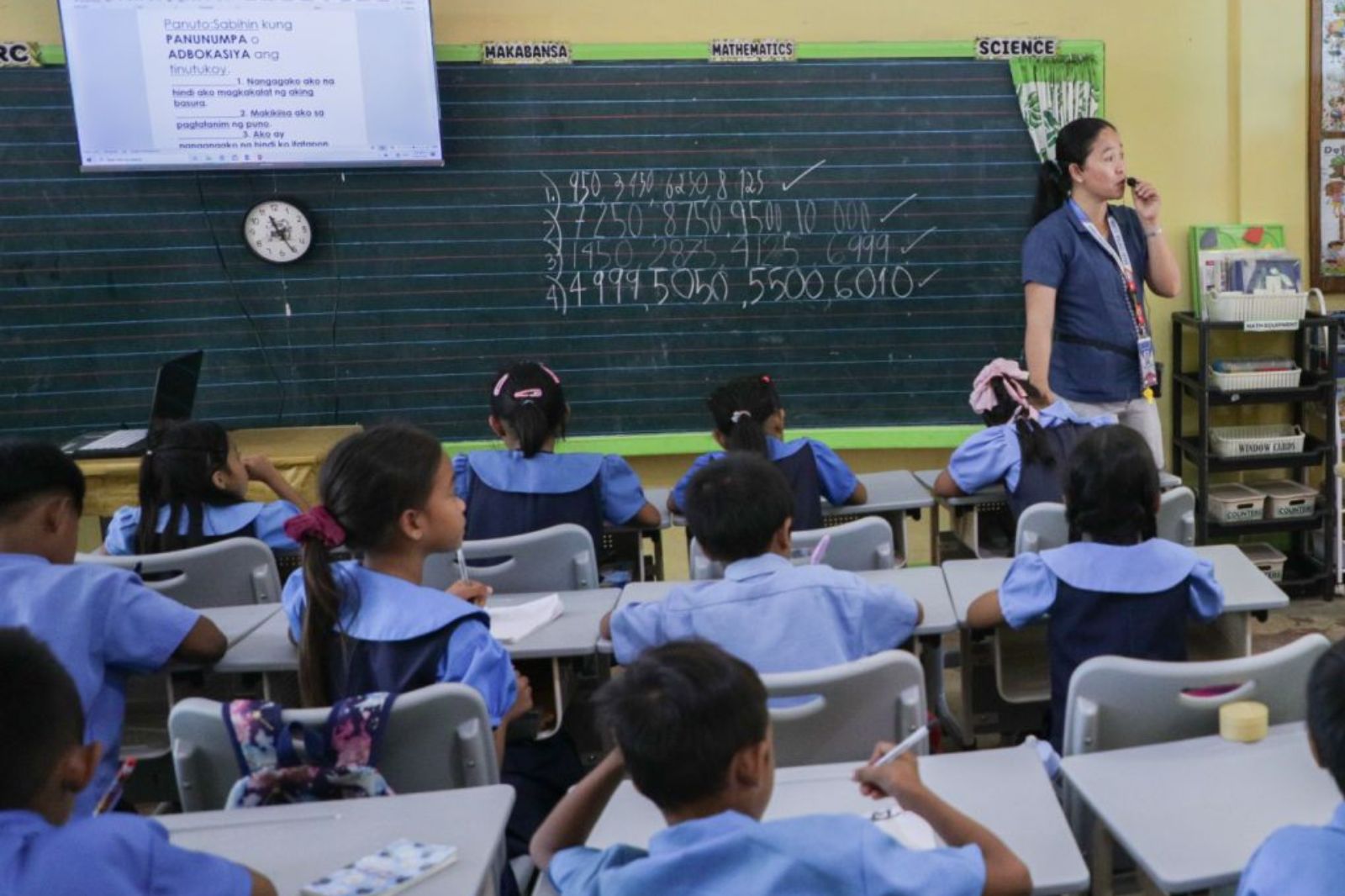
Following the Philippines’ strongest performance yet in the 2025 Programme for International Student Assessment (PISA), the Department of Education (DepEd) is rolling out PISA for Schools, an OECD assessment service that provides school-level results benchmarked against international performance.
“We have to keep our momentum going after our best performance yet in PISA. This [PISA for Schools] can help us understand more clearly what is happening inside our schools and where support is most needed,” Education Secretary Sonny Angara said.
Unlike the national PISA, which measures student performance at the country level, PISA for Schools provides comparable results at the school level. It assesses the same core competencies of 15-year-old learners in reading, mathematics, and science and is delivered digitally, with Tagalog now among its available languages.
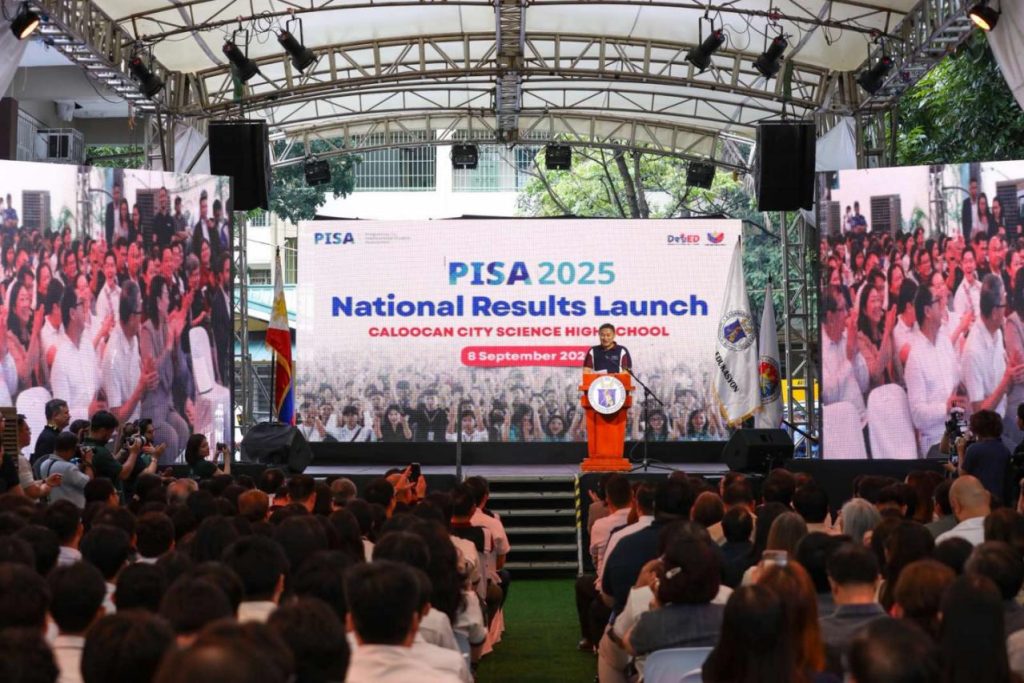
During a forum on sustaining the Philippines’ PISA gains, Undersecretary for Strategic Management Ron Mendoza said the initiative will allow schools and education leaders to use the assessment more flexibly between international PISA cycles. It will also provide opportunities to test strategies and innovations aimed at improving learning outcomes.
“PISA for Schools can help strengthen collaboration between the public and private sectors, allowing us to learn from each other and improve learning for every Filipino learner,” Mendoza said.
The rollout supports DepEd’s broader reform agenda, including decentralization, public-private partnerships, and digitalization. The Philippines joins a growing international community using PISA for Schools, including Brazil, India, Kazakhstan, Spain, Thailand, and the United States.
DepEd will implement the program in phases. Phase I will be conducted as a pilot during the current school year, while Phase II, covering 2027 to 2032, aims to mainstream and scale up the program with support from the World Bank.
World Bank Senior Education Specialist Janssen Teixeria emphasized the need to build on the gains reflected in PISA 2025 and strengthen a system focused on improving learning outcomes.
The initiative is part of Project for Learning Upgrade Support and Decentralization (PLUS-D), a joint DepEd-World Bank effort covering system-level and targeted interventions, as well as monitoring and evaluation.
For Angara, the success of PISA for Schools will ultimately depend on how schools use the data to improve learning.
“Our goal is not to create another ranking. It is to give schools information they can act on. If we know more precisely where learners are struggling, we can better target interventions, strengthen teaching, and direct resources where they can make the greatest difference,” he said.
