


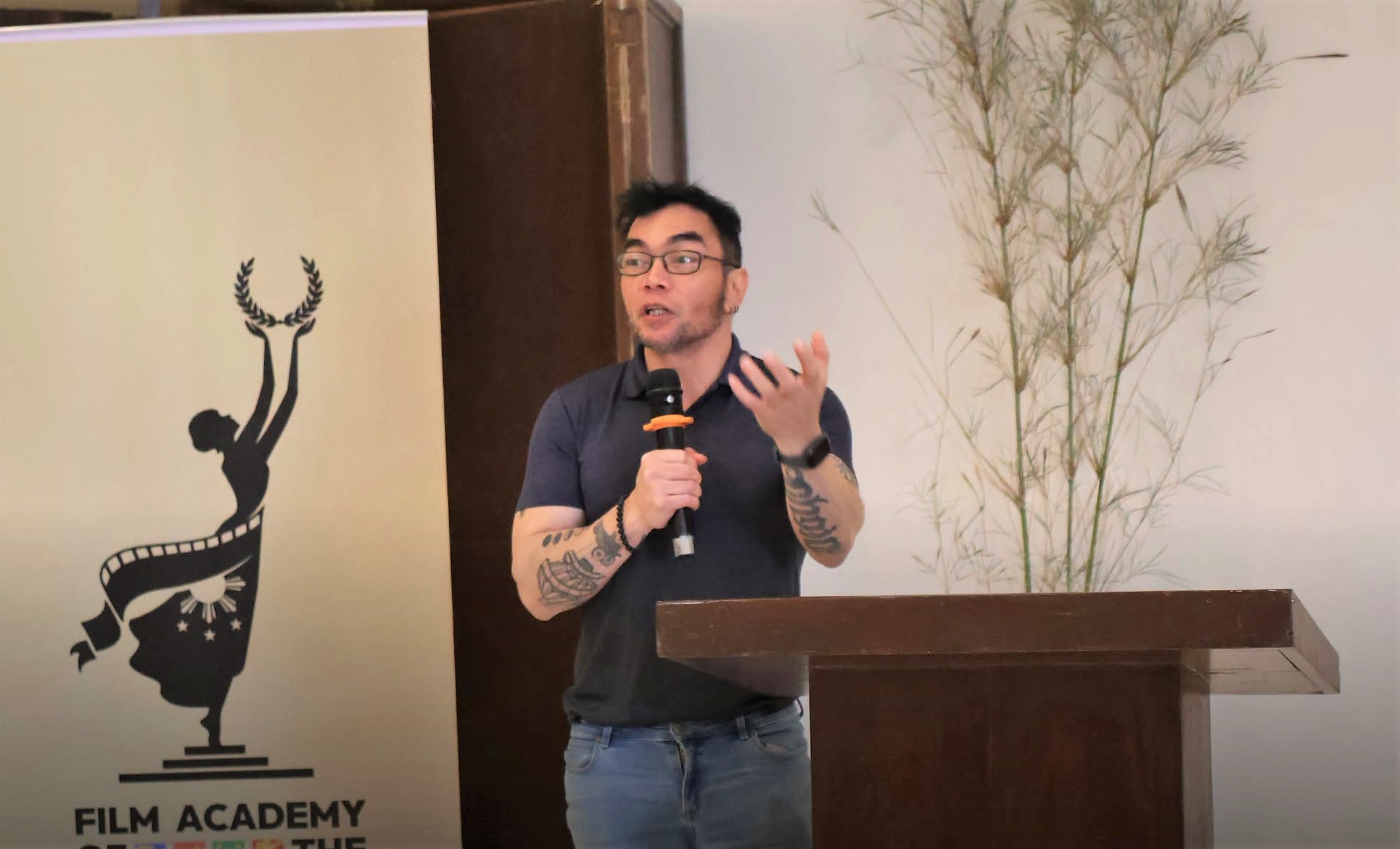
The Film Academy of the Philippines recently convened the inaugural Visayas Guild Summit at Nature’s Village Resort in Talisay City, Negros Occidental.
Bringing together 37 industry delegates, film community leaders, and both established and emerging creators, the summit marked the beginning of a regional mobilization aimed at formalizing grassroots film organizations into structured professional institutions.
The underlying spark for this event is a stark legal and economic reality. According to FAP Director-General Paolo Villaluna, roughly 80 percent of the film and audio-visual workforce in the Philippines operates entirely without traditional employer-employee relationships.

Without a unified professional framework, instability has long been treated as an acceptable norm. The regional workforce remains highly susceptible to contractual inconsistencies, standard registry deficits, and volatile project-to-project employment cycles. When standards do not exist, professional protections become subjective.
To break this cycle of precarity, the FAP’s Film Worker Development Division, led by Mackie Galvez, presented a comprehensive development blueprint at the summit. This strategic roadmap is designed to transition informal creative clusters into legally recognized entities through a clear three-tiered development: organization, institutionalization, and integration.
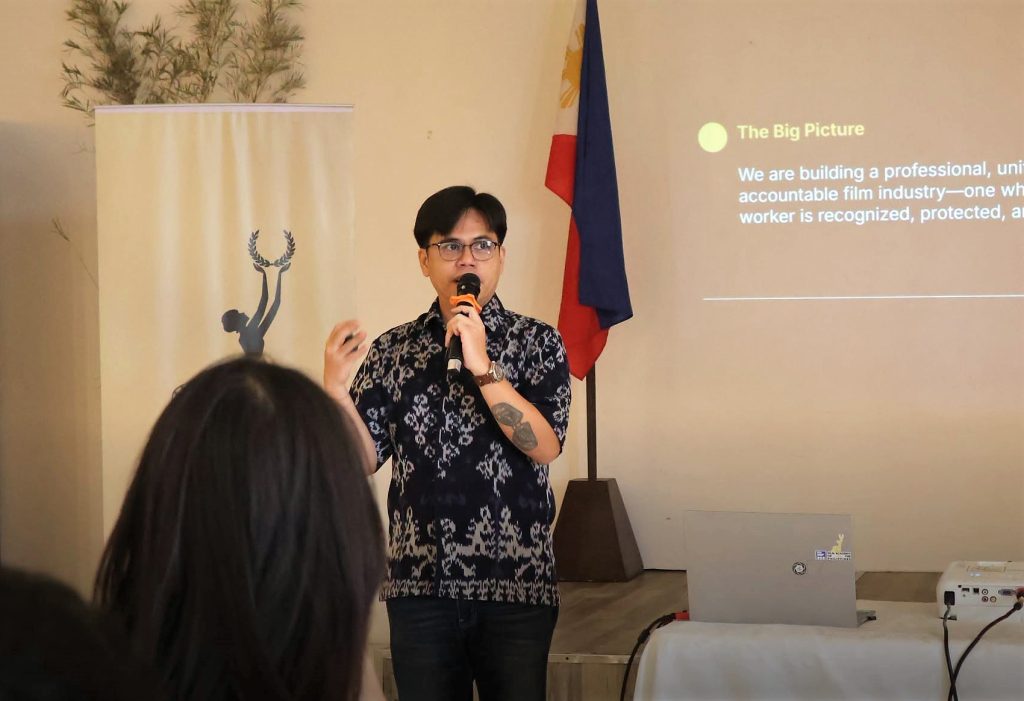
First, identify a committed core leadership group, sharpen a specific sector mandate, and foster communal alignment around shared regional concerns. Next, establish formal by-laws, build stable membership systems, and complete legal compliance requirements such as Securities and Exchange Commission registration, Bureau of Internal Revenue documentation, local permits, and dedicated financial accounts. Finally, connect newly formed organizations directly to national policy discussions, state-backed programs, and structural inter-guild collaborations.
Formalizing regional associations serves as the primary portal for local filmmakers to access major national resources. Under its revised operational framework, the FAP highlighted Guild Initiative Grants for project-specific development and Guild Operational Support Subsidies to alleviate administrative overhead.
The summit dedicated substantial focus to immediate welfare protections. FAP also hosted a Sine-Sandigan legal consultation. Sine-Sandigan acts as a centralized institutional platform designed to directly combat contract violations, non-payment issues, and safety breaches on set. It provides an active legal framework for reporting grievances and strictly enforcing the provisions of the Eddie Garcia Law (Republic Act No.11996) along with national labor mandates.

FAP is also launching a systemic overhaul of how the country’s audiovisual workforce is documented. Historically, regional specialists have remained visually and institutionally invisible within government policy planning spaces due to a lack of empirical workforce data.
To fix this gap, the FAP is rolling out a centralized national membership data pipeline. This matrix provides independent practitioners with a verifiable, official Academy Member ID and an accessible Public Professional Profile. By creating an undisputed source for active industry workers, this infrastructure streamlines direct employment verification, connects regional talent to broader production networks, and guarantees access to foundational security initiatives.
FAP will hold the Mindanao Summit on September and the National Summit on November.
