


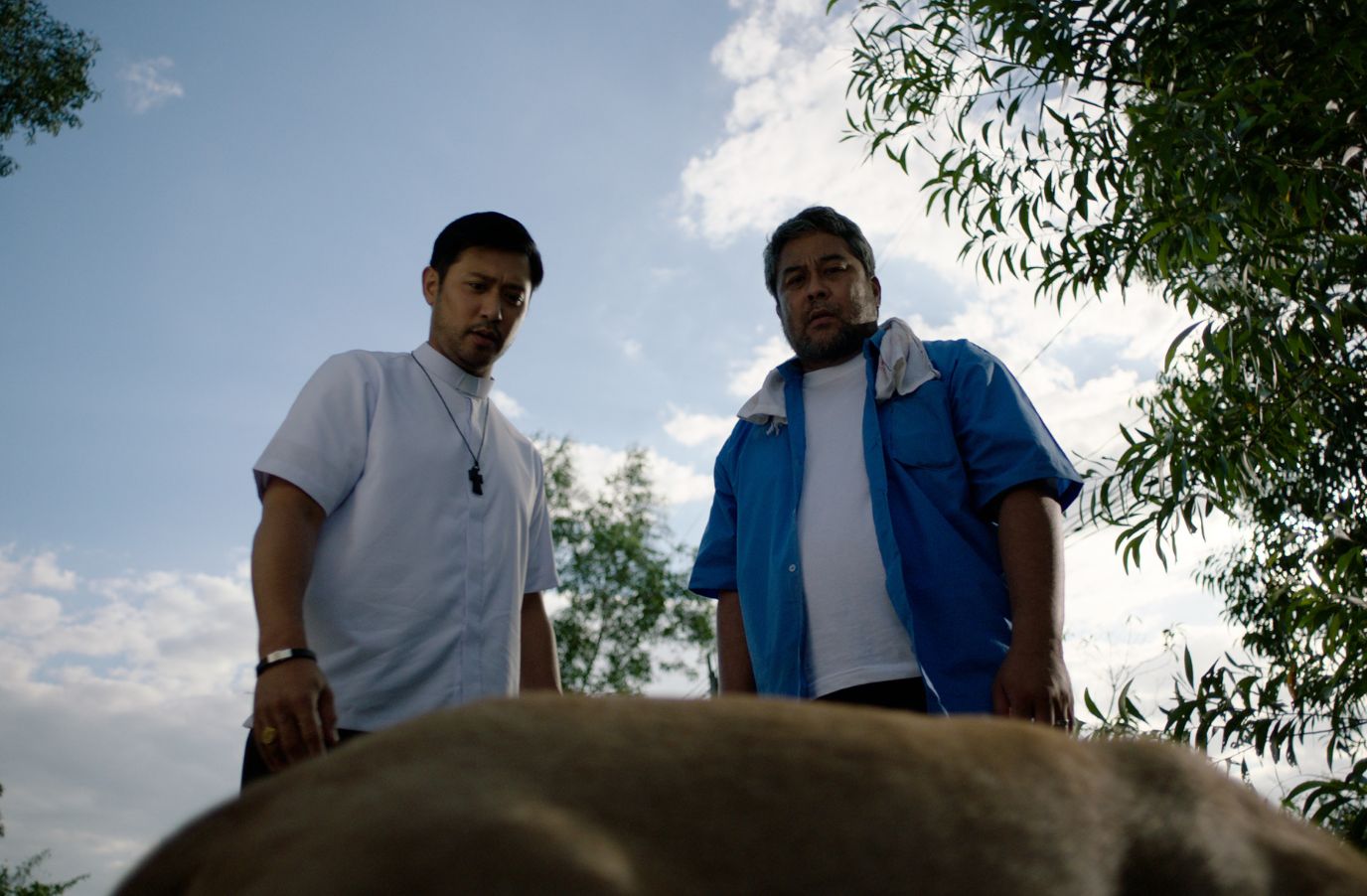
May-i Guia Padilla’s Tirik looks at the war on drugs from a different perspective. Instead of focusing only on the victims, the film enters the mind of someone who became part of the violence. It asks what happens after a person follows an order, completes the task, and is left wondering whether the person he was told to kill was truly guilty. For Santos, played by Floyd Tena, the violence may be over, but the questions remain. His real battle begins when he is left alone with his conscience.
Santos is a taxi driver who seems to be searching for a way to escape the weight of what he has done. His taxi becomes a place where he can move from one destination to another, but there is no real escape from himself. Everywhere he goes, his guilt follows. The film does not portray him simply as a victim or a villain. Instead, it shows a man struggling with the consequences of becoming part of a system where orders can be followed without knowing the full truth behind them.

One of the film’s strongest ideas is Santos’ repeated attempt to seek confession from Father Bert, played by Rocco Nacino. What begins as a simple request gradually becomes a deeper struggle for release, especially as Father Bert himself wrestles with his role in reaching those affected by tokhang. Santos keeps looking for an opportunity to confess, creating a quiet tension between the two characters. The candle he lights also becomes an important image in the film, suggesting remembrance, prayer, guilt, and the hope for peace without having to explain everything.
Floyd gives Santos a restrained performance that works because his pain is mostly kept inside. His troubled thoughts, restless movements, and uneasy presence show a man deeply disturbed by what he has done, unable to find peace even in ordinary moments. There is a constant sense that something is weighing on him, as if his mind refuses to let him move forward. Rocco Nacino also brings depth to Father Bert, portraying a priest who goes beyond simply doing good and listening, as he also wrestles with his own questions and struggles. Their characters represent two different sides of a painful reality, one trying to live with what he has done and another trying to understand and reach those affected by it.
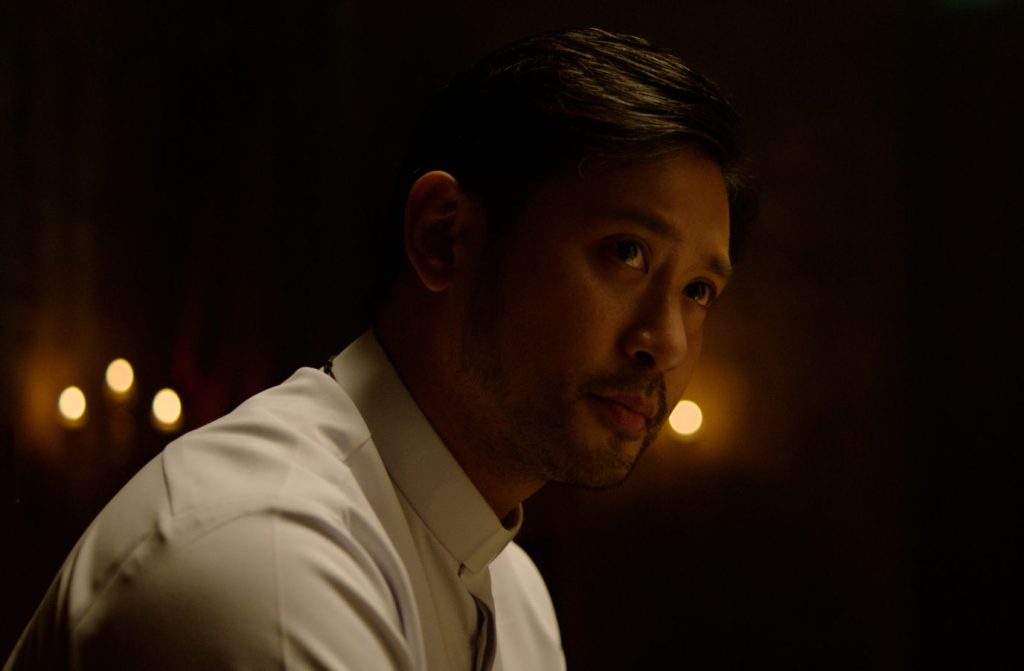
Tirik also has its flaws. Some of its turns can be confusing, while certain scenes feel underexplained or could have been developed further. There are moments when the film seems to hold back information that might have helped make its narrative easier to follow. Because of this, some of its emotional moments do not land as strongly as they could have. Still, these weaknesses do not completely take away from the film’s central idea.
Tirik ultimately leaves us with a question about what violence does not only to its victims but also to those who become part of it. The war on drugs may be discussed through numbers, operations, and headlines, but Padilla brings the issue into something more personal: the mind of a person forced to live with his conscience. The film may stumble in telling its story clearly, but its message remains powerful. Sometimes, the hardest place to escape is not a city, a job, or a past, but your own mind.
