


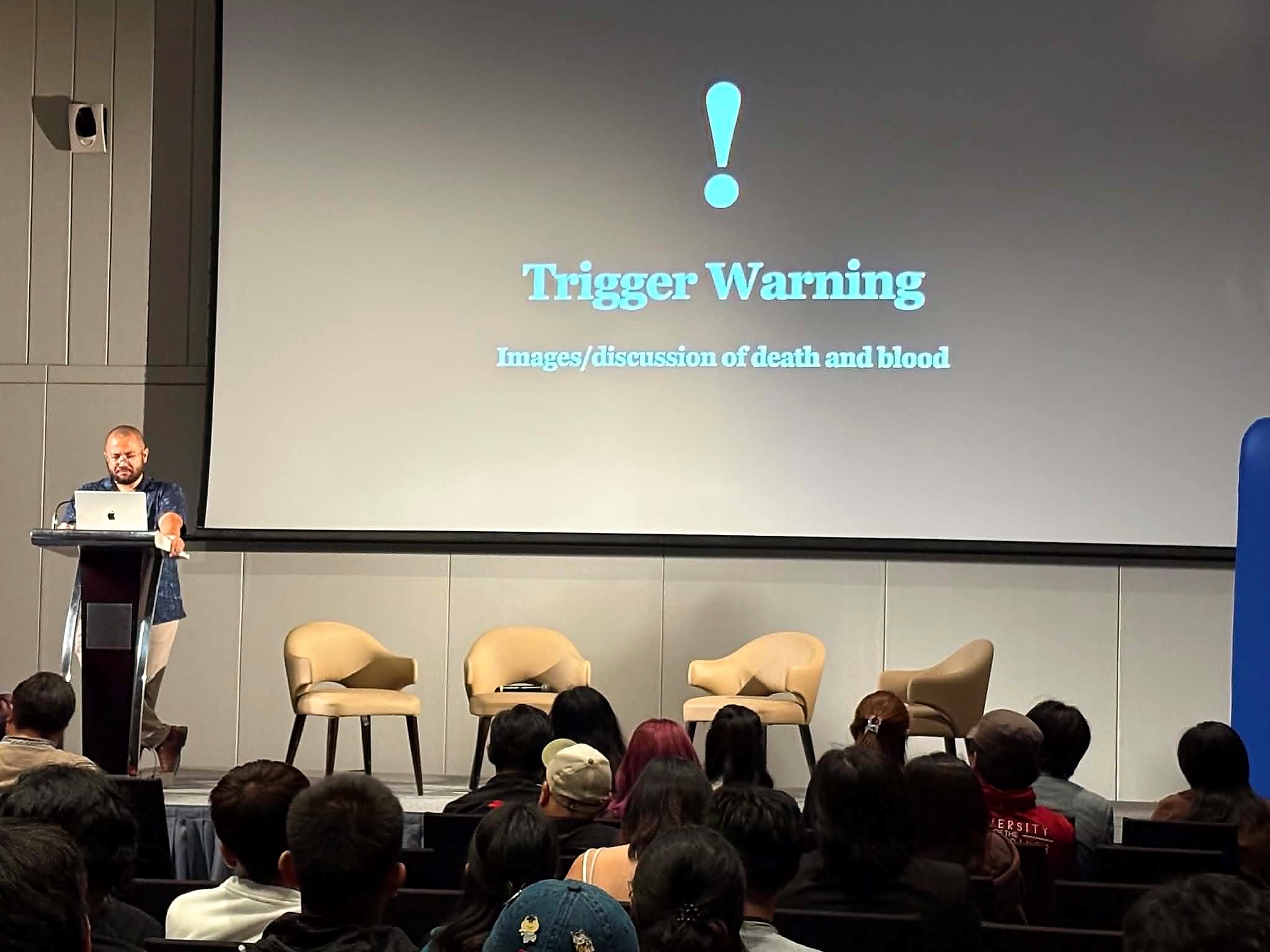
The Foreign Correspondents Association of the Philippines recently brought together more than 200 visual storytellers, both in person and online, for the 3rd Romeo Gacad Lecture on Visual Journalism at Lanson Place, Pasay City.
This year’s lecture series sparked vibrant, critical discussions on the evolving landscape of media. Looking back at a turbulent decade of visual reporting, speakers grappled with industry breakthroughs, systemic roadblocks, and the growing weight of journalistic responsibility in an era defined by “post-truth” politics.
Independent documentary photographer Martin San Diego, whose work centers on the diverse expressions of resistance, set the tone for the day by opening the lecture series.
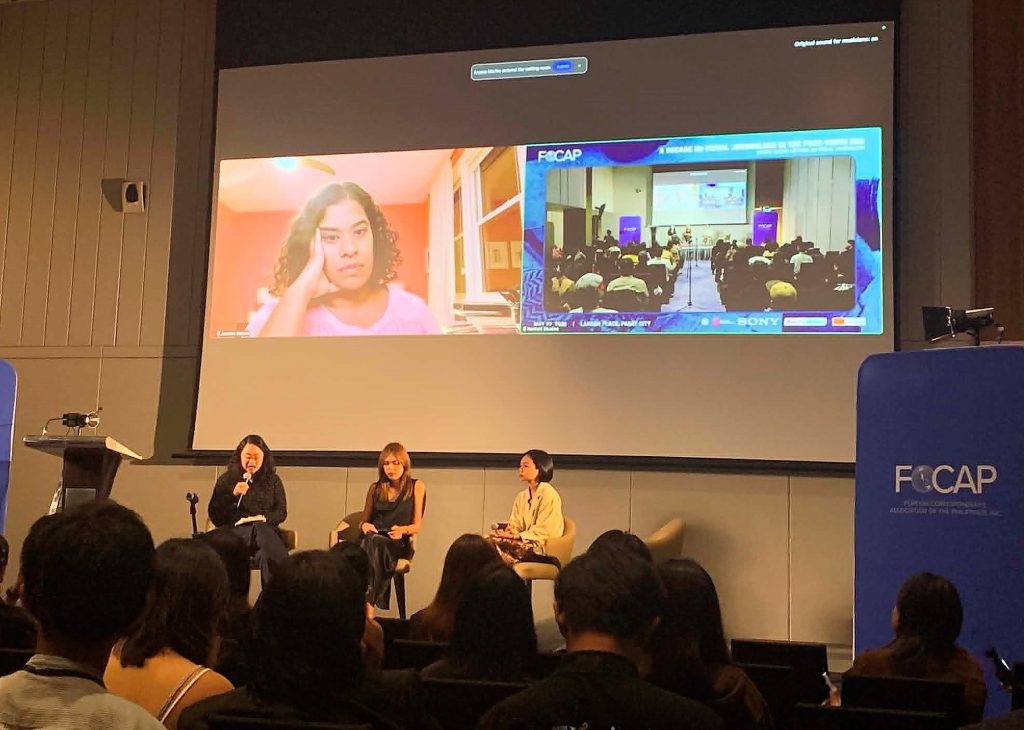
The first panel tackled a persistent industry imbalance that male journalists heavily outnumber their female colleagues across Asia and Oceania, leaving a male perspective to largely dictate how the world views major global events. To counter this, the session introduced women who are reshaping journalism from the frontlines.
Geela Garcia, a Manila-based freelance multimedia journalist and newly elected FOCAP trustee, opened the discussion. Her award-winning work focuses on rewriting history through the lived experiences of women, food sovereignty, and the environment.
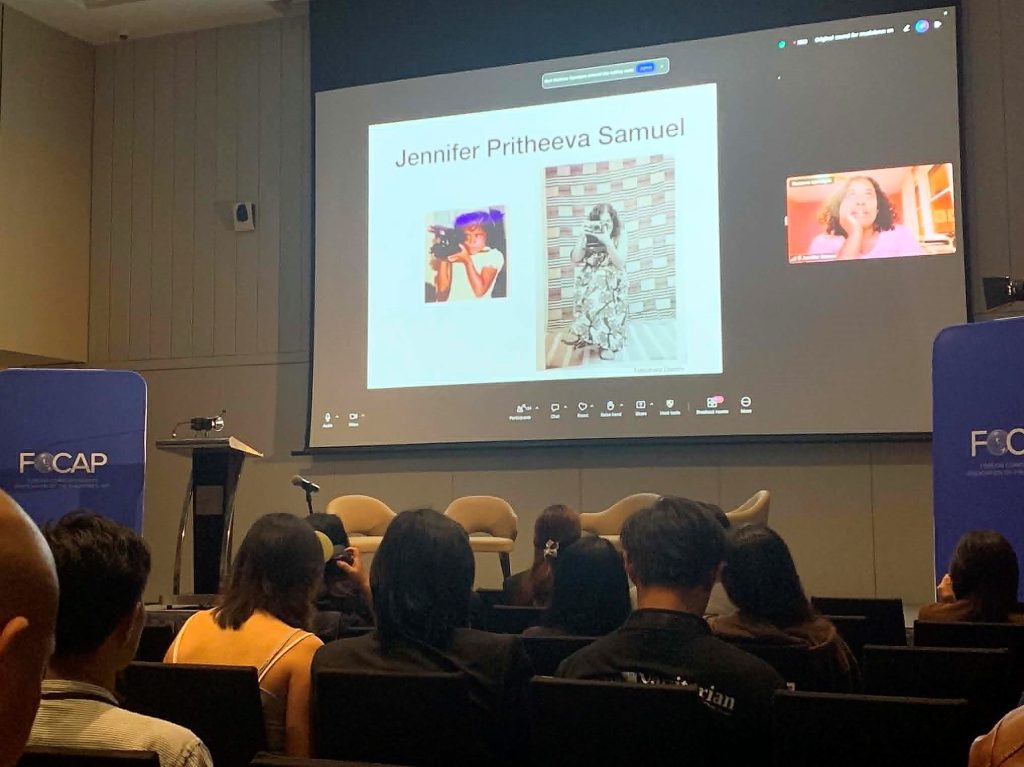
Jennifer Samuel, a Washington, D.C.-based visual editor and producer, brought over 20 years of leadership experience from National Geographic and The Washington Post.
The two were later joined by Faith Brown, a video journalist covering the Philippines for Agence France-Presse. Veteran journalist Jhesset Enano steered the discussion.
The second panel shifted focus to the sweeping political upheavals of the last ten years. Since the election of Rodrigo Duterte in the Philippines, the Brexit referendum, and Donald Trump’s first U.S. presidential victory, weaponized disinformation and coordinated online hate have fundamentally rewritten the rules of global politics.
Panelists examined how contemporary truth-tellers keep their footing when the battlefield moves from physical combat zones to digital trenches.
Fruhlein Econar, who coordinates breaking news visuals and oversees high-stakes print layout adjustments for The Wall Street Journal’s late-edition front pages, demystified the high-pressure role of modern photo editors.
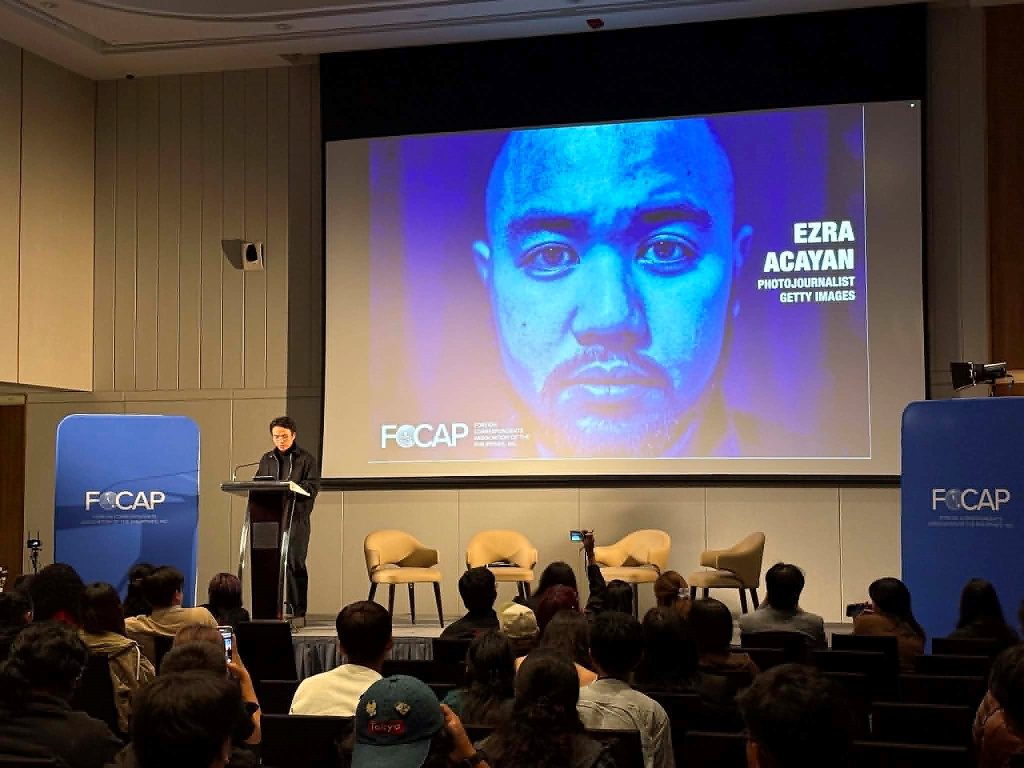
Meanwhile, Ezra Acayan, a Pulitzer Prize finalist and two-time World Press Photo winner, looked back on his extensive coverage of the Philippine drug war. He revealed how witnessing daily cycles of grief fundamentally altered his sense of empathy and reinforced the vital importance of photojournalism when facts are under siege.
“This year marks a decade since I first began covering the war on drugs in the Philippines – a story that profoundly shaped me not only as a photographer, but as a person,” Acayan shared.
Independent photojournalist Raffy Lerma, who spent 12 years with the Philippine Daily Inquirer before transitioning to freelance work to document the drug war, joined Econar and Acayan on stage. Freelance journalist Regina Cabato moderated the session.
Against a backdrop of shrinking press freedoms and state-enabled narratives across Southeast Asia, the event highlighted a shared resolve among attendees to defend factual reporting and amplify marginalized voices.
