


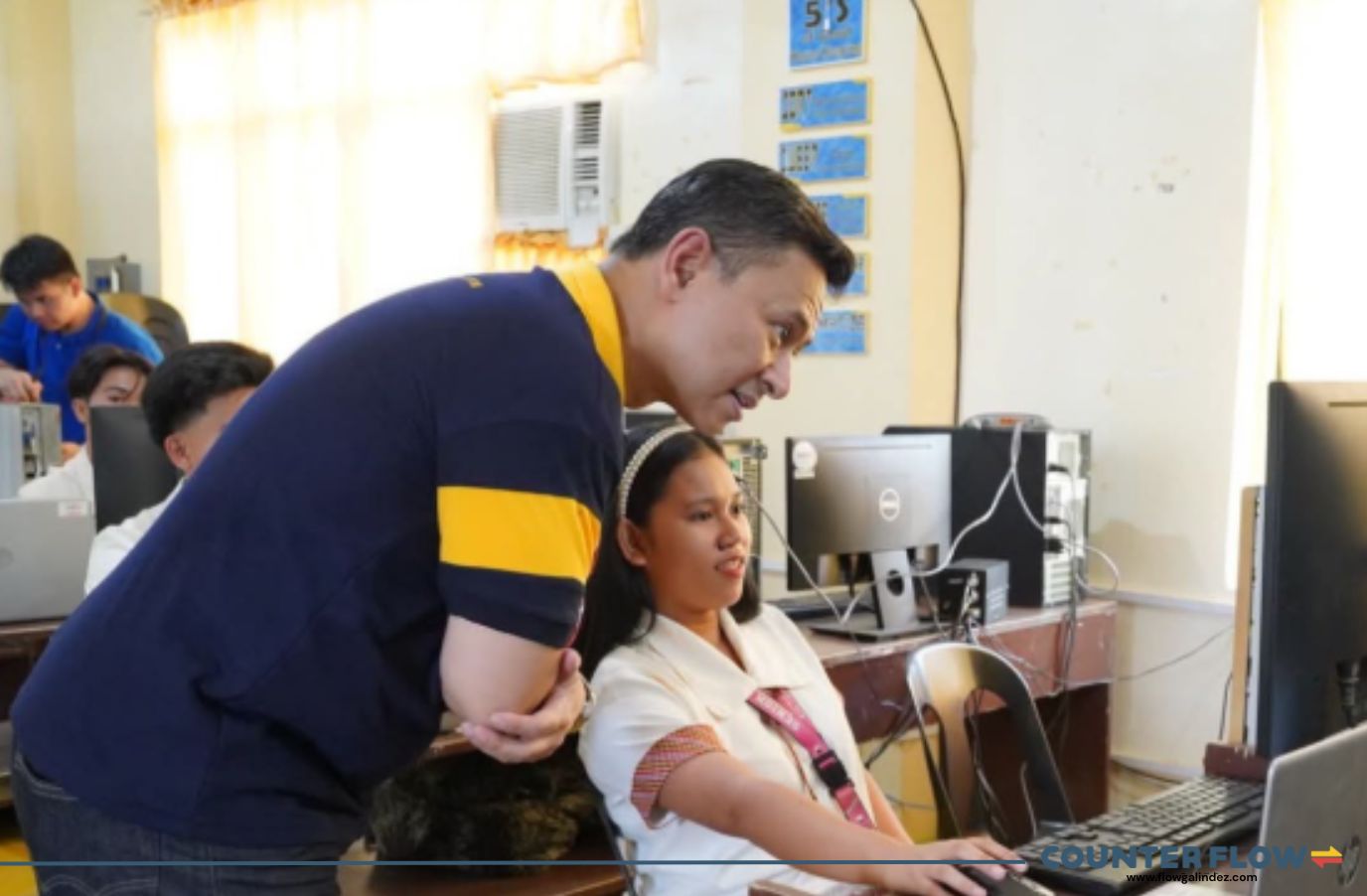
Under the leadership of Secretary Sonny Angara, the Department of Education (DepEd) advanced wide-ranging reforms in 2025 that improved learning environments and pushed system-level changes forward. These included strengthening senior high school (SHS) tracks, tightening the alignment between curriculum and assessment, and expanding initiatives that prepare learners for work and further study.
Together with governance and infrastructure upgrades, these reforms reinforced DepEd’s direction under the Five-Point Reform Agenda toward producing graduates with practical skills, clearer pathways to employment or higher education, and an education system capable of sustaining these outcomes.
“Kasama sa paalala sa atin ni Pangulong Bongbong Marcos ang pagkakaroon ng education system na tunay na makatutulong sa mga kabataang Pilipino, isang sistemang maghahanda sa kanila sa susunod na yugto ng kanilang buhay, ang pagpasok sa mundo ng trabaho,” Secretary Angara said.
Following the ratification of the General Appropriations Bill by Congress on December 29, DepEd is set to carry this momentum into 2026, sustaining the delivery of quality education nationwide.

To make the final years of basic education more responsive and relevant, DepEd launched the Strengthened Senior High School Program, designed to better support learners’ transition from school to work. Central to the reform is a streamlined curriculum that now offers two clear pathways: the Academic track and the Technical-Professional track. The Department also expanded the Work Immersion Program from 80 hours to 320 to 640 hours for Technical-Professional learners, providing deeper, hands-on workplace experience.
In 2026, DepEd, working with Regional Directors and Schools Division Superintendents, will explore further curriculum enhancements and the broader rollout of these initiatives. Secretary Angara also committed to sustaining the provision of free National Certification (NC) assessments in partnership with the Technical Education and Skills Development Authority (TESDA). In 2025 alone, the two agencies supported more than 170,000 SHS Technical-Vocational-Livelihood learners.
Looking ahead, DepEd will prioritize the effective implementation of the Philippine Qualifications Framework and the Philippine Skills Framework, in coordination with education and other government agencies, to ensure smoother and more seamless transitions from education to employment.
Secretary Angara underscored the importance of improving system efficiency to ensure the smooth delivery of programs that directly benefit teachers and learners. Under special provisions in the 2026 budget, classroom delivery will be more flexible, allowing local government units and private institutions to partner with DepEd in building resilient and modern school facilities. The enhanced Adopt-a-School platform will also enable more private partners, including individual donors, to participate in classroom construction.
These measures support DepEd’s infrastructure targets: 24,547 classrooms to be built under the Basic Education Facilities Fund, 1,700 classrooms to be leased, 11,886 classrooms to be repaired, and 105,000 new classrooms to be delivered under the PSIP initiative.
DepEd will also build on its investments in technology and artificial intelligence, highlighted by the launch of the Education Center for AI Research (ECAIR), which will serve as the Department’s hub for evidence-based policy and innovation.
“Sa ilalim ng Bagong Pilipinas ng ating mahal na Pangulo, mas lalo nating pagtitibayin ang sistema ng edukasyon upang makalikha ng mas maraming oportunidad para sa ating mga kabataan,” Angara said.
