


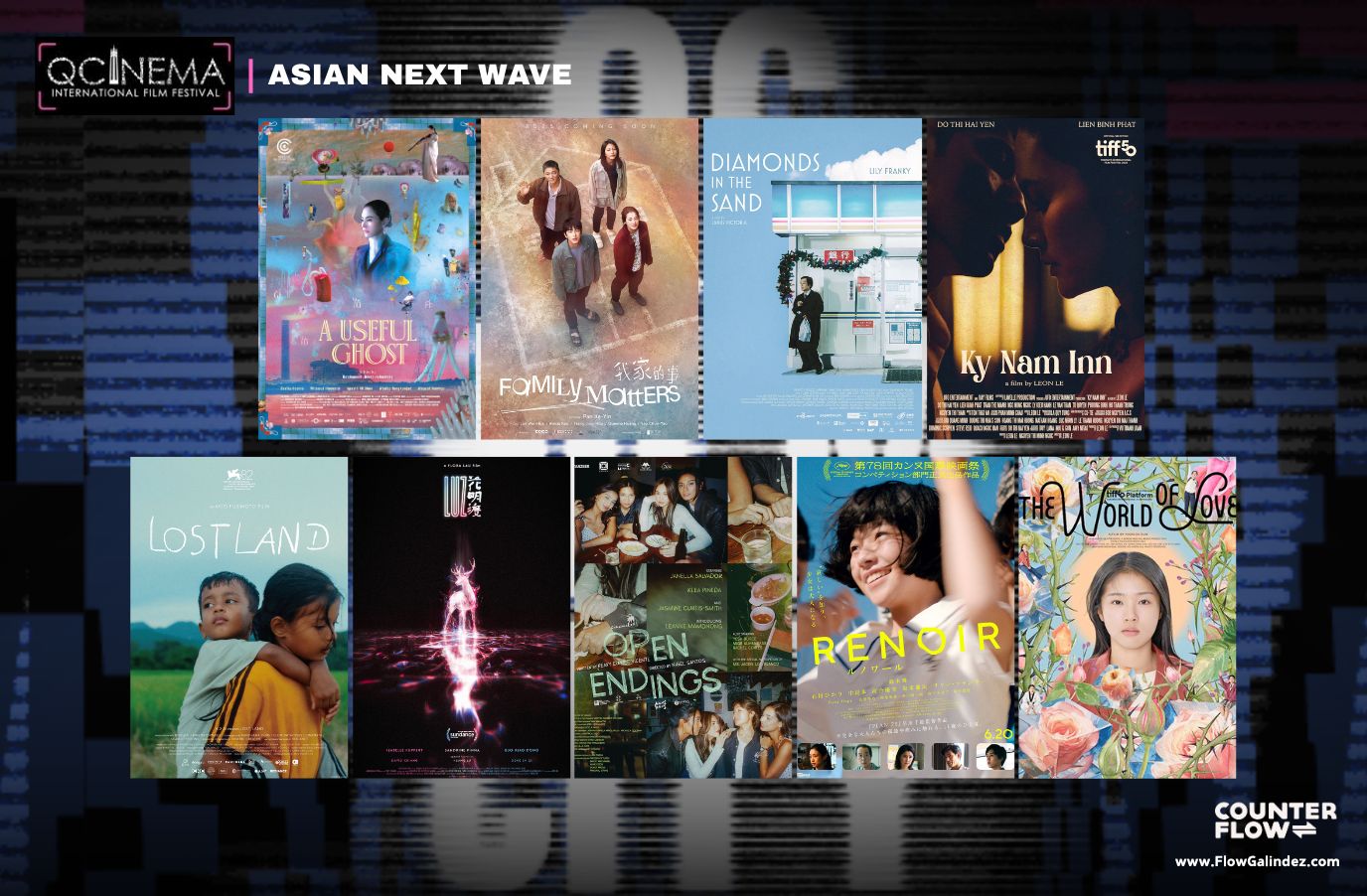
QCinema once again celebrates Quezon City’s pivotal role in the history and evolution of Philippine cinema as it announces the complete lineup for the 13th QCinema International Film Festival.
At the forefront of this year’s festival is the Asian Next Wave, one of QCinema’s main competition sections that champions bold new voices from across Asia. The 2025 lineup features a diverse selection of award-winning and highly anticipated films:
Competing in Asian Next Wave:
A Useful Ghost by Ratchapoom Boonbunchachoke (Thailand, France, Singapore, Germany), winner of the Grand Prix at Cannes Critics Week 2025 and Thailand’s official entry to the 98th Academy Awards for Best International Feature Film

A Useful Ghost follows March, a grieving man whose wife, Nat, returns after dying from dust pollution and possesses a vacuum cleaner. Their unconventional romance is scorned by his family, especially since their factory is already haunted. To be accepted, Nat must become a “useful ghost” by cleansing the factory of other disruptive spirits, turning the absurd premise into a dark, satirical exploration of love, class differences, and the suppression of painful political history in Thailand.
Diamonds in the Sand by Janus Victoria (Japan, Malaysia, Philippines), recipient of the White Mulberry Award for Best Debut Film at the 2025 Udine Far East Film Festival

The film follows Yoji, a lonely, divorced Japanese salaryman whose life in Tokyo is marked by isolation and a fear of kodokushi (lonely death). After his mother dies, Yoji impulsively decides to leave his empty life behind and follow Minerva, the kind Filipina nurse who cared for her, back to her home city of Manila. In the vibrant and chaotic Philippines, Yoji is immediately drawn into Minerva’s tight-knit family and community, a sharp contrast to the solitude he once knew. The film explores themes of human connection, the migrant experience, and the cultural differences in how people confront loneliness and destiny.
Family Matters by Pan Ke-yin (Taiwan), Southeast Asian premiere and winner of the Uncaged Award for Best Feature Film at the New York Asian Film Festival
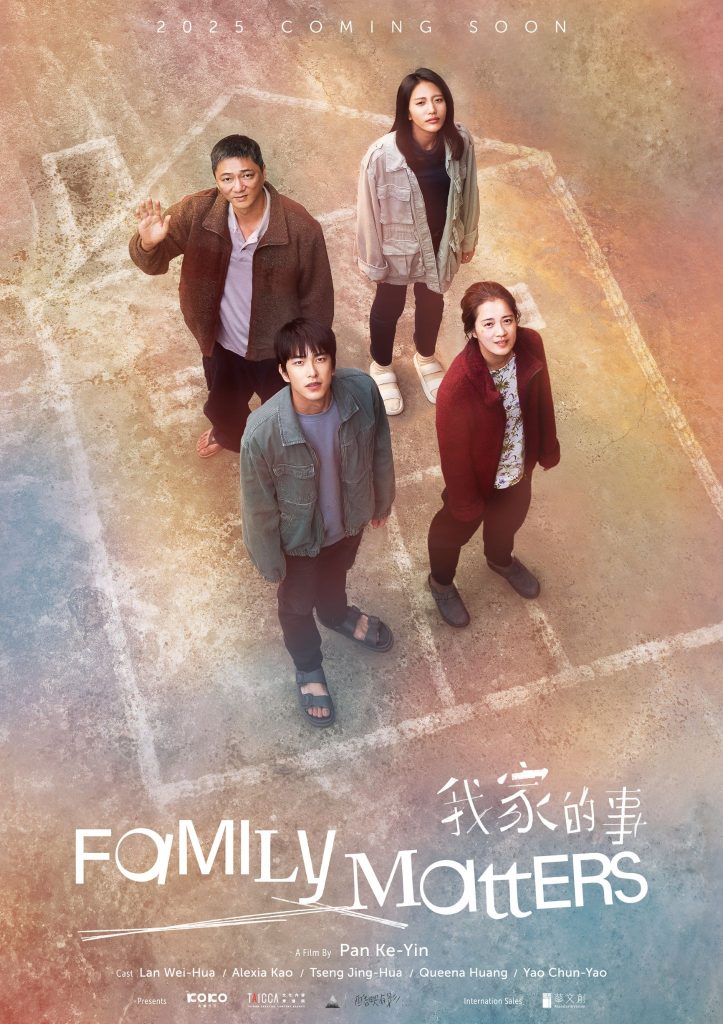
Family Matters follows the working-class Hsiao family across two decades, using a non-linear, multi-perspective narrative to reveal long-hidden wounds. Spring discovers she was adopted, Autumn faces intense pressure to bear a son, Summer attempts to reconnect with his distant father, and Winter’s gambling addiction and temper push the family to its breaking point. Through these struggles, the film explores adoption, fertility pressures, addiction, and poverty while portraying the quiet sacrifices and complicated love that keep the family from falling apart.
Ky Nam Inn by Leon Le (Vietnam), Southeast Asian premiere.
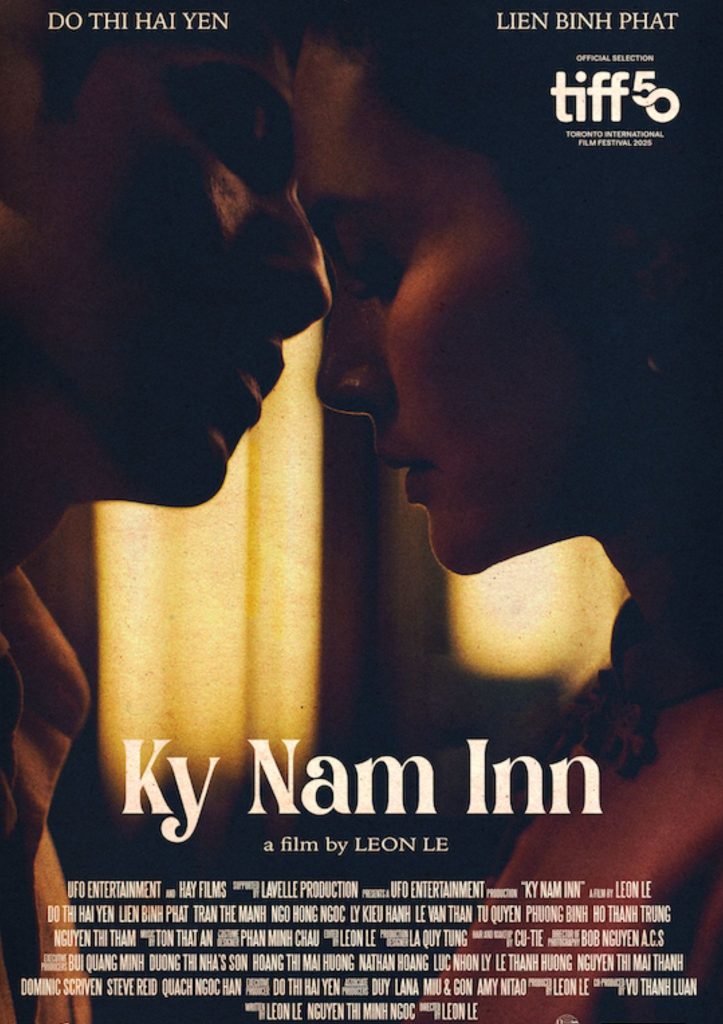
Ky Nam Inn is a subtle and lyrical post-war Vietnamese romance set in 1980s Saigon. The story follows Khang, a young translator from the North who arrives to work on a new translation of The Little Prince and rents a room in a communal building where he meets Ky Nam, a reserved older widow from the South who runs a small cooking business. Despite coming from opposing sides of Vietnam’s recent history, the two slowly develop a deep, platonic bond that offers quiet comfort amid shared wounds. Using their relationship and the metaphor of kynam, a rare resin formed only when a tree is hurt, the film reflects on unspoken desire, political and generational divides, and the human need for solace in the aftermath of trauma.
Lost Land by Akio Fujimoto (Japan, France, Malaysia, Germany), Southeast Asian premiere and Special Jury Prize winner in the Venice Horizons section of the 2025 Venice Film Festival
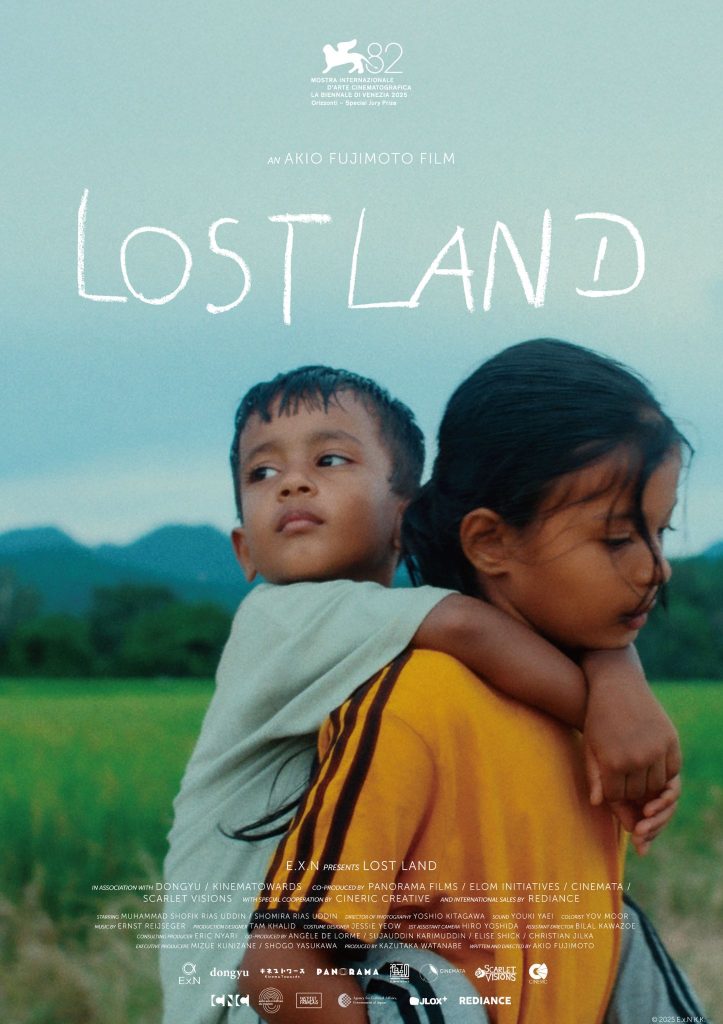
The story follows two young siblings, nine-year-old Somira and her four-year-old brother Shafi, who leave a refugee camp in Bangladesh to embark on a perilous, 28-day journey to reach Malaysia in the hope of reuniting with their scattered family. Told entirely in the Rohingya language and featuring non-professional actors who are themselves Rohingya, the film immerses the viewer in the children’s ordeal. It captures the extreme physical hardships, dangers of trafficking, and emotional toll of the journey, all while finding fleeting moments of childhood innocence and resilience against the backdrop of a profound humanitarian crisis. Ultimately, it is a humanistic portrait that focuses on the desperate hope and sheer will to survive in the face of forced displacement.
Luz by Flora Lau (China, Hong Kong), nominee for the Grand Jury Prize in the World Cinema Dramatic category at the 2025 Sundance Film Festival
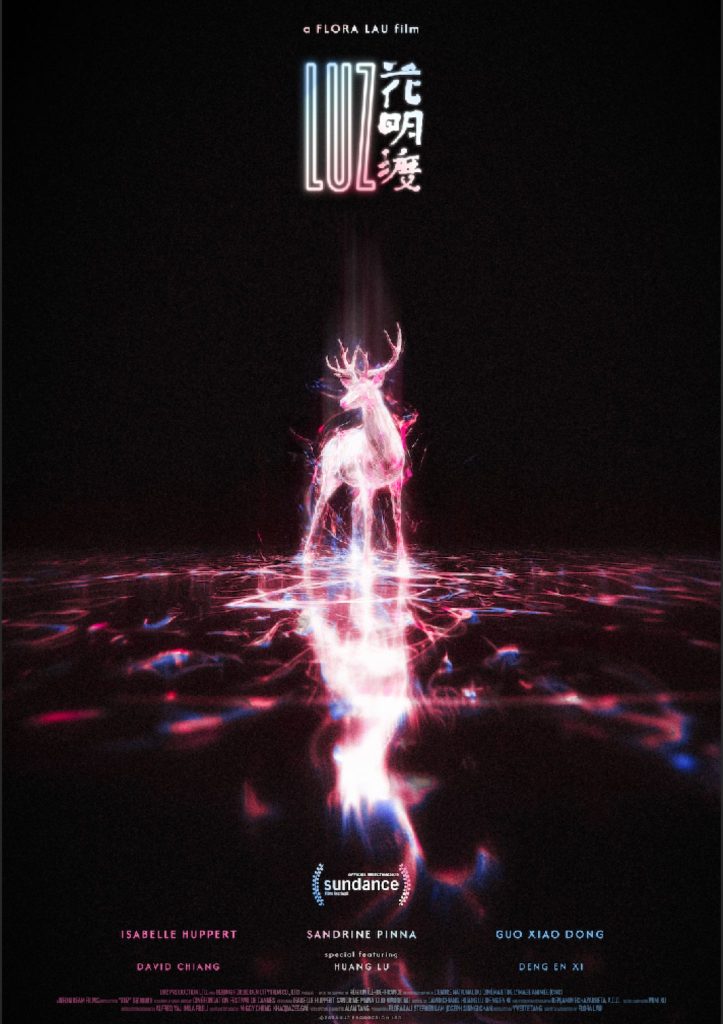
The story follows two parallel quests across different continents: Wei, a father in the neon-lit city of Chongqing, desperately searches for a way to reconnect with his estranged daughter, Fa. Meanwhile, Ren, a Hong Kong gallerist, travels to Paris to contend with her famous, ailing stepmother, Sabine. The lives of these disconnected individuals unexpectedly collide within a virtual reality (VR) world called Luz. Inside the game, their shared quest to capture a mystical deer acts as a metaphorical journey, blurring the line between the digital and physical realms and ultimately forcing them to confront their real-life issues of belonging, familial love, and the complex ways human bonds are sustained in the modern era.
Open Endings by Nigel Santos (Philippines), Southeast Asian premiere and winner of Best Ensemble Performance at the 21st Cinemalaya Independent Film Festival
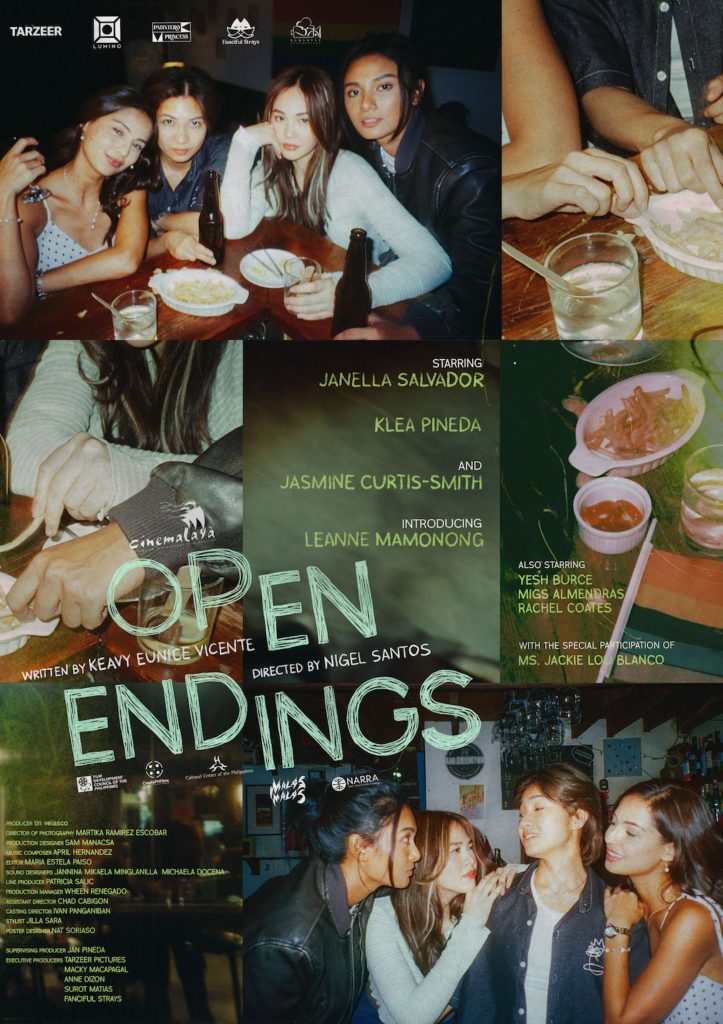
The story revolves around four queer women in their early thirties: Hannah, Charlie, Kit, and Mihan, who share an unusually deep and tangled history. They are all exes-turned-best friends after various romantic and sexual entanglements with one another over the years. The romance may be over, but the friendship remains a vital lifeline. Their bond is tested when Hannah, the glue who holds them together, faces a life-changing decision involving her engagement and upcoming wedding. This forces the others, particularly Mihan who still carries lingering feelings, to confront their unresolved emotions and question what their friendship is truly worth. The film avoids clean closure and highlights the messy, imperfect, and ultimately resilient nature of queer kinship.
Renoir by Chie Hayakawa (Japan), nominated for the Palme d’Or at the 78th Cannes Film Festival.
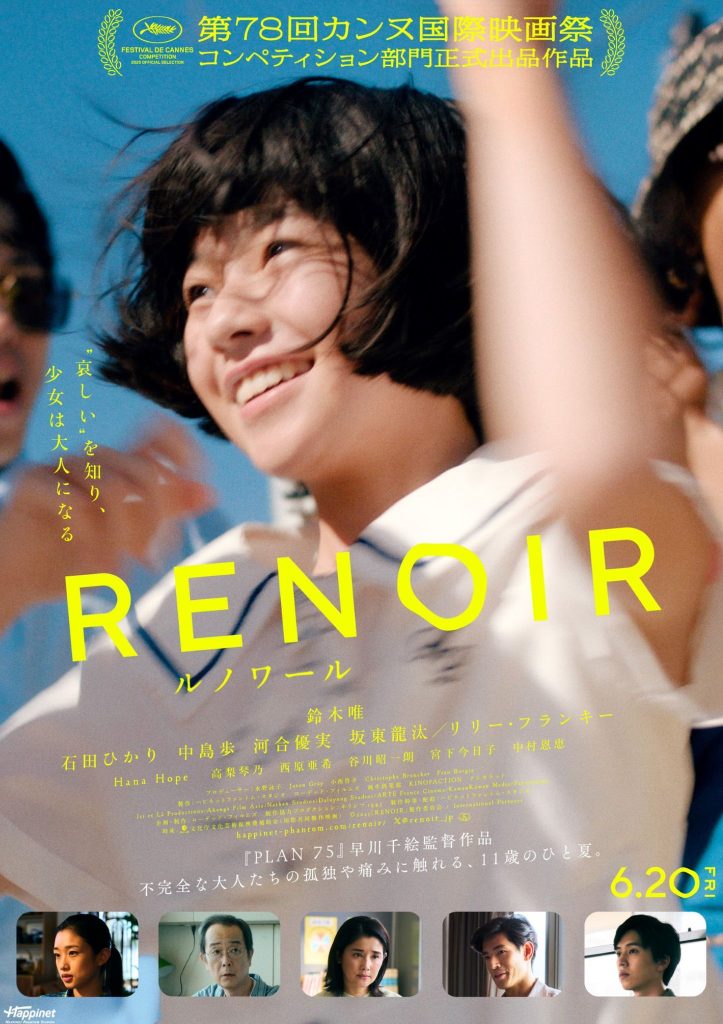
The film is told through the perspective of Fuki, an introspective 11-year-old girl, whose family life is dominated by the imminent death of her father, Keiji, who is battling terminal cancer. With her father mostly in the hospital and her mother constantly preoccupied by work and stress, Fuki is left largely alone to cope with her impending grief. She retreats into a rich fantasy world and develops unusual hobbies, including practicing telepathy and hypnotism, and engaging in risky interactions, like calling a phone dating line. The film is an impressionistic portrait of a child navigating loneliness and processing mortality, with the director deliberately blurring the lines between Fuki’s reality and her vivid imagination as she struggles to understand the pain and emotional distance of the adults around her.
The World of Love by Yoon Ga-Eun (South Korea), Southeast Asian premiere and winner of both the Roberto Rossellini Jury Award and the Audience Award at the Pingyao International Film Festival
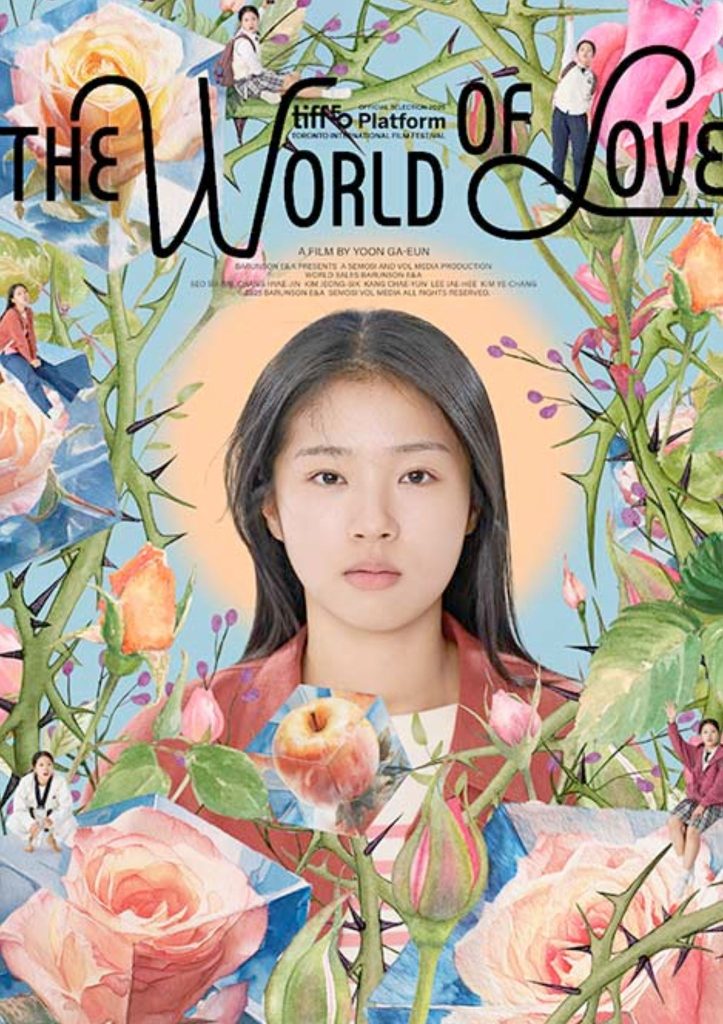
The film centers on Joo-in, a spirited and outwardly confident 17-year-old high school student who seems to be navigating the usual world of teenage romance and friendships. Her life takes a tense turn when a local news story about the possible return of a child sex offender to the neighborhood prompts a school-wide petition. Joo-in is the only one who refuses to sign, and in the heat of the confrontation that follows, she impulsively reveals a long-buried childhood trauma. Soon after, she begins receiving unsettling anonymous notes that question her honesty and sincerity, pushing her to confront both her past and the social stigma placed on survivors. The film examines the quiet resilience required for Joo-in to reclaim her story and her agency as she moves from being defined by her pain to shaping her own future.
The festival’s closing film will be the winner of the Asian Next Wave Best Film award.
QCinema 2025 also features several other competitive sections. RainbowQC presents queer stories that challenge, resonate, and inspire. New Horizons shines a light on debut and sophomore features exploring the boundaries of world cinema. QCShorts International highlights the most promising short film directors from Southeast Asia.
The festival also features Exhibition Sections further expand the lineup with a rich array of global cinema. Screen International, one of QCinema’s most anticipated programs, showcases critically acclaimed works fresh from recent festival circuits. Before Midnight explores the uncanny and extraordinary, while Rediscovery brings timeless cinematic classics to the big screen once more. QC Selects curates an exciting mix of contemporary films for every type of moviegoer, and QCShorts International (Exhibition) features distinctive short works from celebrated auteurs worldwide.
Two new spotlights debut this year. Dokyu Days is QCinema’s dedicated space for documentary storytelling, featuring powerful and thought-provoking non-fiction films. Focus On: Sandra Hüller pays tribute to the acclaimed German actress and her exceptional body of work.
The 13th QCinema International Film Festival runs from November 14 to 23, 2025, with screenings at Gateway, Robinsons Galleria, Eastwood, Trinoma, Fishermall, and Cloverleaf. Tickets are priced at ₱250.
For updates and the full schedule, visit qcinema.ph.
