


Two new exhibitions highlight the richness and resilience of Philippine intangible cultural heritage in celebration of National Indigenous Peoples Month and Museums and Galleries Month.
The National Commission for Culture and the Arts (NCCA) presents “Haggi̱yo, Huwah! A Living Heritage of the Tuwali Ifugao of Hungduan, An Intangible Cultural Heritage of Humanity” and “Community, Creativity and Continuity: The Story of the NCCA Schools of Living Traditions” at the NCCA Gallery in Intramuros from October 13 to 30, 2025. Curated by a team led by Renee Talavera, Chief of the NCCA Program Management Division, both exhibitions explore how traditions endure through memory, practice, craftsmanship, and the passing of knowledge from one generation to the next.
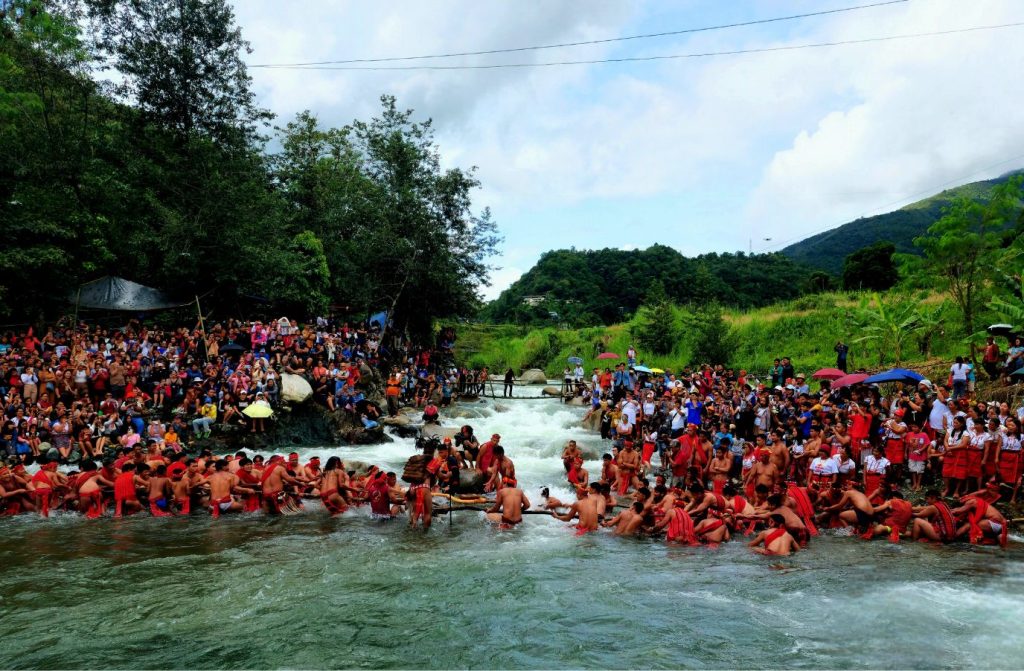
“Haggi̱yo, Huwah!” showcases an age-old ritual still practiced by the Tuwali Ifugao communities of Hungduan, a town nestled in the Cordillera highlands. At its heart is the Huwah, the post-harvest celebration of the communities of Hapao, Baang, and Nungulunan, culminating in the Punnuk, a spirited tug-of-war played in the Hapao River.
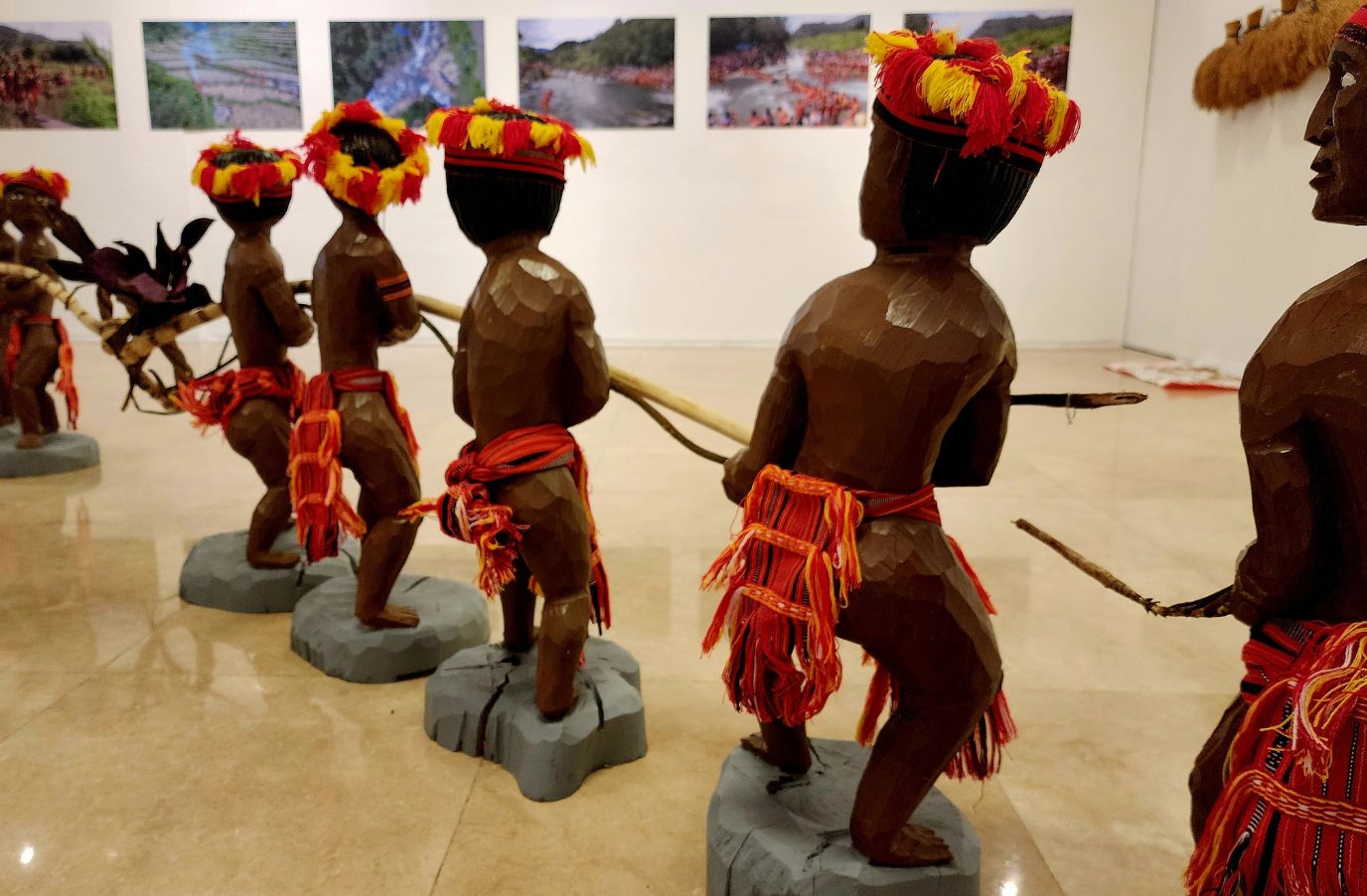
“The Punnuk,” writes journalist and filmmaker Roel Hoang Manipon in the exhibition notes, “is a convergence of ritual, memory, and play that closes the year’s labor on the terraces and reaffirms the ties of kinship and community.” Inscribed in 2015 on UNESCO’s Representative List of the Intangible Cultural Heritage of Humanity, the Punnuk is represented in the exhibit through artifacts such as the kina-ag, an anthropomorphic figure used in the ritual; a bayah jar for rice wine used in divination; and traditional Ifugao attire. Wooden figures carved in Hungduan depict the guyyudan or tug-of-war using the pakid, a hooked wooden implement.
Manipon’s vivid photographs bring the exhibit to life, capturing the communities in motion, the harvests, the rituals, the carving of the kina-ag, and the dramatic river games. A short documentary written and directed by Manipon immerses visitors further into the energy and devotion that define the Punnuk, where the river itself becomes both stage and spiritual cleansing ground.
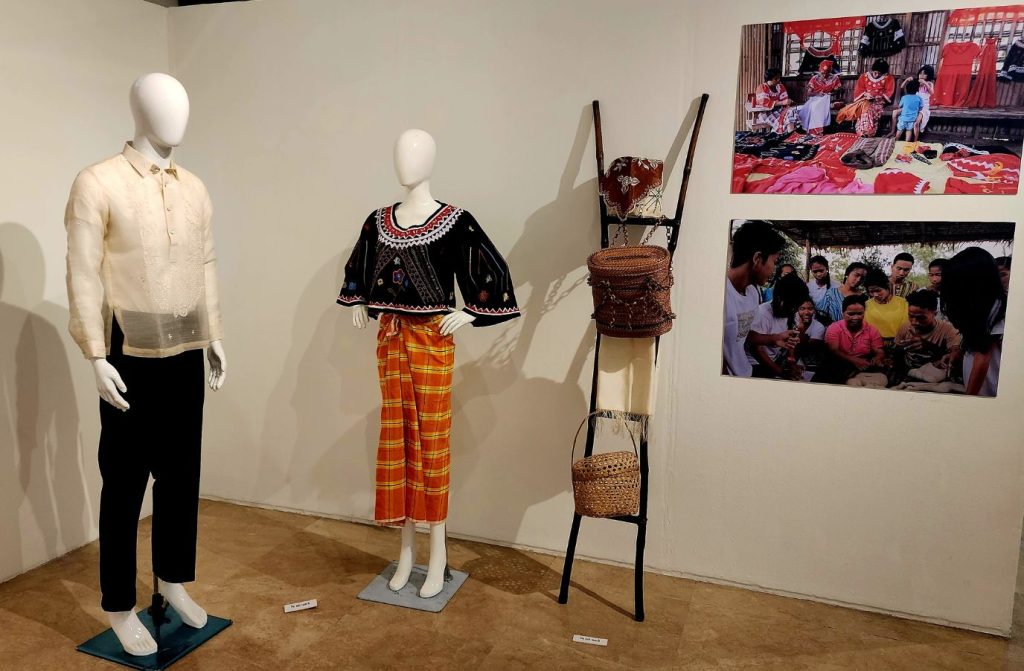
Running alongside “Haggi̱yo, Huwah!” is “Community, Creativity and Continuity: The Story of the NCCA Schools of Living Traditions,” which highlights how Filipino communities keep traditional crafts and practices alive through intergenerational teaching. The Schools of Living Traditions (SLT) are community-run centers where cultural masters pass on indigenous, folk, and traditional knowledge to younger generations through hands-on learning. Established in 1995, the program has supported over 300 SLTs nationwide, from the Dumagat Remontado and Kalinga in Luzon to the Panay Bukidnon, T’boli, and Mandaya communities in the Visayas and Mindanao.
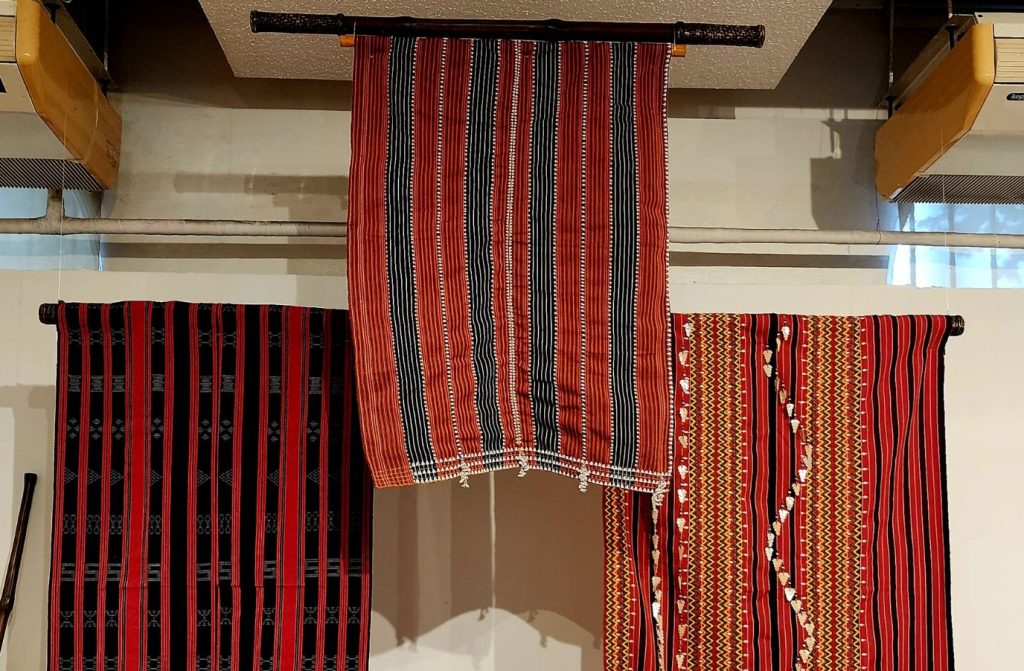
In 2021, UNESCO recognized the SLT program in its Register of Good Safeguarding Practices, citing it as a model that “best reflects the principles and objectives of the 2003 Convention for the Safeguarding of the Intangible Cultural Heritage.” The exhibition features crafts made by SLT learners including woven textiles, sleeping mats, basketry, and traditional attire, alongside photographs by Gerald Marcfred Dillera showing cultural masters and apprentices at work. As Manipon notes in his curatorial text, “Each object and image tells the story of continuity, of how elders, youth, and communities together weave cultural memory into everyday life.”

The display is complemented by Manipon’s short documentary “School of Living Traditions of the National Commission for Culture and the Arts: Safeguarding Philippine Cultural Traditions, Empowering Communities,” which captures how cultural transmission strengthens community identity and pride.
Viewed together, the two exhibitions form a powerful portrait of cultural vitality, one flowing with the rhythm of an Ifugao river and the other resonating with the craft and creativity of communities across the archipelago. “Haggi̱yo, Huwah!” and “Community, Creativity and Continuity” remind visitors that heritage is not a relic preserved behind glass but a living current that connects the past to the future, like the rivers, hands, and hearts that continue to shape it.
Both exhibitions run at the NCCA Gallery, 633 General Luna Street, Intramuros, Manila, until October 30, 2025.
